Tag: Wasatch County

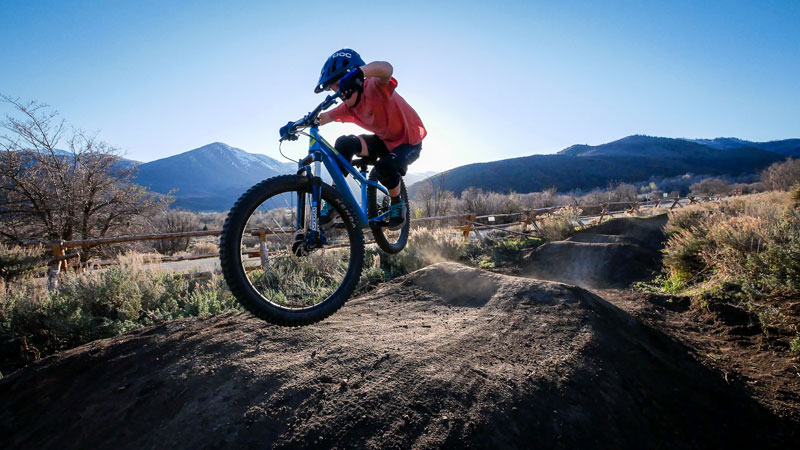
  • The First Official Backcountry Trail Connection Between Summit and Wasatch Counties

    The First Official Backcountry Trail Connection Between Summit and Wasatch Counties

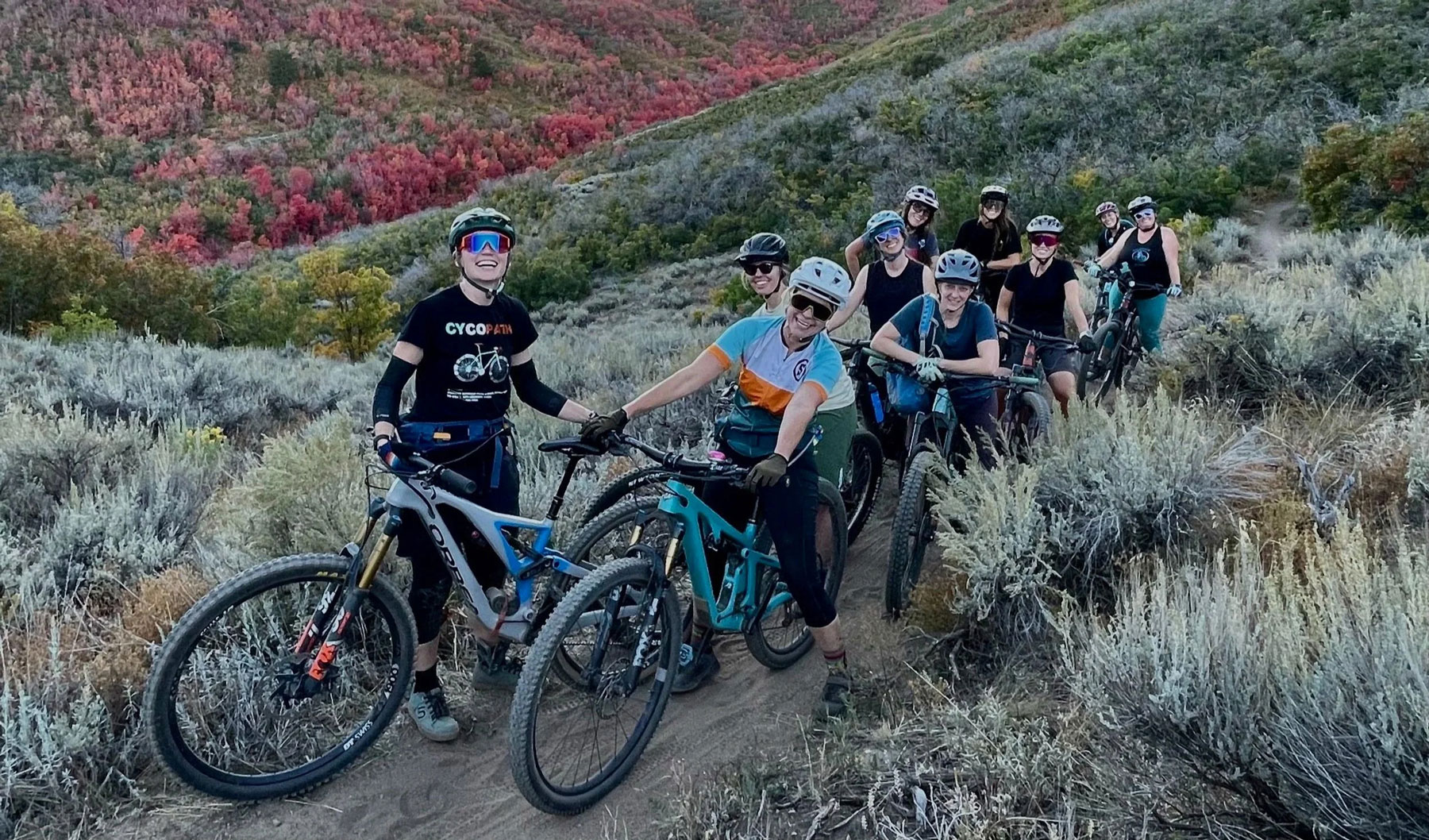
    HEBER CITY, UT (Dec. 22, 2025) — The Wasatch Trails Foundation (WTF) and the Mountain Trails Foundation (MTF) will officially open the BLT (Bonanza Loop Trail) to WOW Connector Trail in Spring of 2026, conditions permitting. This five mile connection will offer a backcountry trail experience to hikers, runners, and bikers through stunning terrain and serve as the first official connection between Wasatch and Summit County trail systems.

    The project was originally conceived over 10 years ago by Rick Fournier, former MTF trails manager and Scott House, current WTF board president. The trail consists of one main multiuse/bidirectional connector, Tall T, an intermediate downhill MTB trail, WOWZA DH (with advanced options), an MTB climb/multiuse trail, WOWZA, and a hike-only spur, Boulder Dash.

    Executive Director of the Mountain Trails Foundation, Lora Anthony said, “The entire system of WOW trails isn’t just connecting communities through trails, it is a shining example of what longterm, supportive relationships between many partner organizations can bring to bear. Mountain Trails is proud to be but one spoke in this wheel of success.”

    “It’s super exciting to see WOWZA come to life as part of the broader Bonanza Flat to WOW Trail connection. Its location speaks to the Foundation’s commitment to balance wilderness and open space protection, while still providing meaningful trail connections. The build of the trail reflects our abilities to integrate natural features and terrain into a modern, sustainable trail design that is sure to get riders of all levels stoked,” said House.

    The BLT to WOW Connector Trail project was funded by three separate grants, two from the Utah Division of Outdoor Recreation, UORG (Utah Outdoor Recreation) and RTP (Recreational Trails
    Program), and a smaller grant from the Wasatch County TAP (Trails Arts and Parks) Tax. Through hard work and determination, WTF received all approvals to hire MTF as the trail contractor and begin construction in the Spring of 2024 with a hard completion deadline of Fall 2025.

    Project coordinators faced numerous obstacles in completing this project, including, but not limited to, wildlife mitigation areas, changing tides in the Park City political space and building over the dangerously steep terrain of Tall T peak (elevation 9,360”). Current WTF executive director, Mia Yue stated, “There were multiple times over the last three years that I was convinced this connection was dead in the water. Without the support and pure grit of our Board (WTF) and our main partner, Mountain Trails Foundation, we would not have made this happen.”

    To support future projects and become a member of the Wasatch Trails Foundation, visit wasatchtrails.org.

    About Wasatch Trails Foundation

    Wasatch Trails Foundation is a not for profit 501(c)(3) that advocates for trails in Wasatch County. The foundation is committed to cultivating memorable experiences for the community by enhancing and preserving outdoor spaces. Its efforts are guided by three key pillars: building and maintaining a healthy trail system, connecting the community, and ensuring that everything is built to last. Through collaboration with its members, volunteers and local officials, Wasatch Trails Foundation creates sustainable spaces that support the outdoor lifestyle and strengthen community bonds.

    Learn more > Wasatch Trails Foundation

    Learn more > Mountain Trails Foundation

  • Public Open House Event: Deer Creek Reservoir Trail Feasibility Study

    Public Open House Event: Deer Creek Reservoir Trail Feasibility Study

    Public Open House: October 7, 2025

    Date: Tuesday, October 7, 2025
    Time: 4:00 p.m. – 6:00 p.m.
    Location: Wasatch County Senior Center
    Address: 465 East 1200 South Heber City, Utah 84032
    Format: Drop in. Review Alternatives, View Selected Alternative, Ask Questions

    Deer Creek Reservoir Trail Feasibility Study Overview

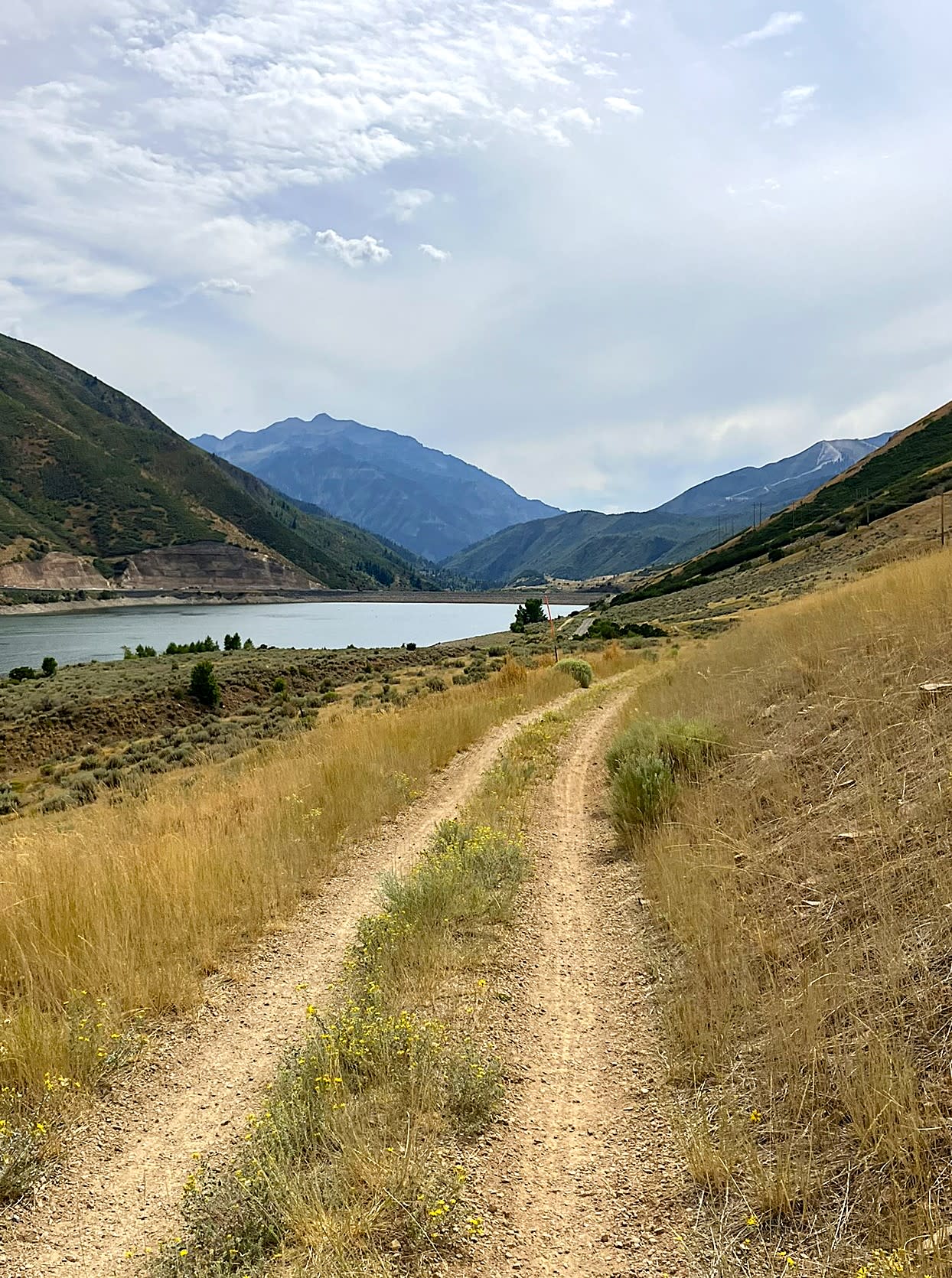
    UDOT is studying improvements to the unpaved trail on the west side of Deer Creek Reservoir in coordination with Wasatch County, Deer Creek State Park, Wasatch Mountain State Park, Bureau of Reclamation, Heber Valley Historic Railroad, and nearby property owners. The study will look at options to create a 6.75-mile paved path between the Wasatch Mountain State Park and Deer Creek Dam trail heads. Also the study will explore ways to retain an unpaved option for hikers, mountain bikers, and equestrians. The effort will use a topographic survey and updated environmental review to guide future design and eventual construction.

    The Utah Trail Network is being built to create a continuous system of paved, shared-use paths designed for walking, biking, and other non-motorized travel. These paths will link communities across Utah, like a highway system. They provide safe, comfortable, and reliable alternatives to driving. To learn more about the Utah Trail Network, please visit: https://utahtrailnetwork.udot.utah.gov/. The Deer Creek Reservoir Trail segment plays a key role, connecting the Heber Valley and Provo Canyon, that helps complete a major loop of trails that will eventually span the Wasatch Front and Wasatch Back. Once constructed, this trail will improve local mobility and serve as a vital segment of Utah’s larger statewide network.

    Study Map

    The study area is the existing unpaved Deer Creek Reservoir Trail from the Wasatch State Park trail head to the Deer Creek dam trail head.


  • Homegrown Leadership

    Homegrown Leadership

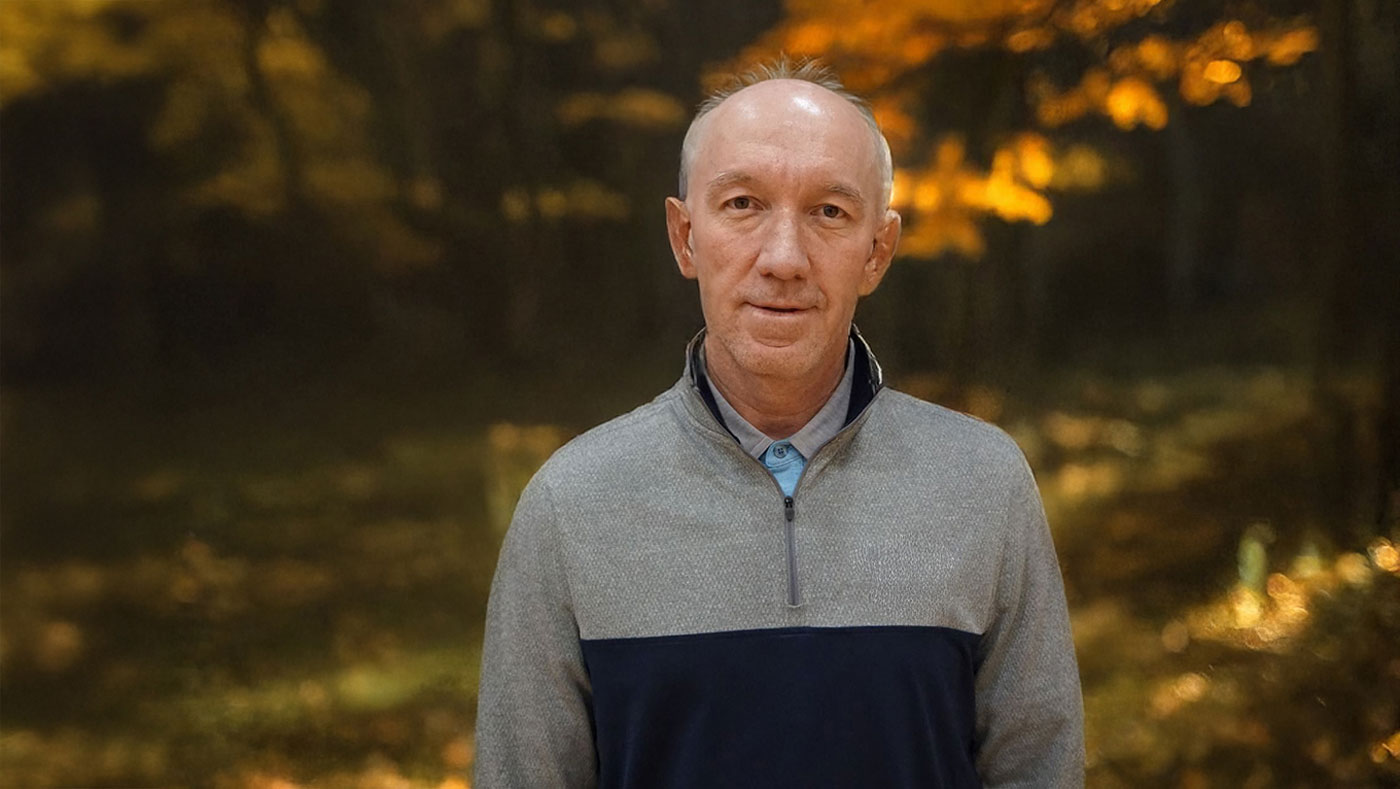
    When Tom Bonner first stepped into the role of Parks and Recreation Director for Wasatch County on June 6, 1995, the entire department consisted of… well, him. “I was the only employee,” he recalls. “I hired a few seasonals in the summer to mow grass and chalk baseball diamonds. But everything else? I did it myself.”

    Three decades later, the department he built now spans over 160 acres of parkland, a nationally recognized Event Center, a vibrant Rec Center that sees thousands of local families annually, year-round programming, and nearly 90 full-time and part-time staff. And this summer, Tom is stepping away from it all, retiring after a career defined by service, growth, and deep local roots.

    A Wasatch County Native with Deep Roots

    “I’ve been the director for all 30 years,” Tom says with a modest smile. “Same job, my whole career.” That’s pretty rare these days.

    Rare, indeed, but fitting for a fifth-generation native of Wasatch County who still remembers when Heber had a single stoplight and Dairy Keen was the only drive-thru in town. Growing up in Midway, Tom probably never imagined that one day he’d oversee a department that would become central to community life in the valley.

    His journey to Parks and Rec wasn’t exactly planned. At the time, Tom was working in the golf business at the Homestead. “I wasn’t even looking for a job,” he says. “But my boss, Chris Brisco, told me, ‘If you don’t apply for that job, I’m going to fire you.’” Thankfully, Tom listened. “He was the smartest business mind I’ve ever known, and he saw something I didn’t. Turns out, he was right.”

    From the very beginning, Tom approached Parks and Rec with a clear mission: build something that brings people together and make it accessible for all.

    “I used to do everything,” he recalls. “Mowing lawns, dragging fields, running programs, even scorekeeping. And I used my family too,” he laughs. “They were my free labor, my wife Angie, my daughter McKinzie, and my son Max; they helped with cleanup, time clocks, and concession stands. You name it.”

    Over the years, Tom’s department expanded dramatically, but he never lost that hands-on spirit. His assistant director, Heath Coleman, began working for Tom at the age of 16 and is viewed by some as the natural continuation of his legacy. “Heath’s done every job in this department,” Tom says. “From grounds crew to program director. He knows it inside and out.”

    It’s that kind of homegrown loyalty that defines the Parks and Rec team. Many of Tom’s senior staff have been with him for 15 to 29 years. “Amaria Schovil’s been with me 29 years. Kim Kowallis, 20 years. Eric Lappe and John Provost, over 15. That kind of continuity is unheard of. I don’t have much turnover, and that’s a testament to how much they care about this place.”

    Under Tom’s leadership, Wasatch County has become a go-to destination for major events. “We could do events every weekend if we wanted to,” he says. “But I’ve always told my team: From Memorial Day to Labor Day, we go hard. Then we rest. I want them to have a life too.”

    Among the department’s crowning achievements is the Demolition Derby. Once on the verge of disappearing, the derby has exploded in popularity. “Ten years ago, we were lucky to get seven or eight cars,” Tom says. “Now, we’re the biggest derby west of the Mississippi. We host drivers from Canada, Florida, Wisconsin, and beyond. It’s wild.”

    More of Tom’s favorite events include the Firecracker Baseball Tournament—”It’s wood bat, old-school baseball. I love it”— and the Utah State High School Rodeo Finals, which Tom helped host during his very first summer on the job. “That event is special. The kids, the tradition, it’s pure Heber.”

    Powered By Community Support

    Tom credits the local community and businesses for much of the department’s success. “We have 40-plus sponsors contributing over $250,000 annually,” he says. “Mountainland Auto, Karl Malone Dodge, Redmond Salt, Lee’s, Moe at One Stop—they don’t hesitate. If I needed a thousand dollars tomorrow, Moe would pull it out of his pocket. That’s just who he is.”

    Even staffing major events is a community effort. “The high school football team takes tickets. The cheerleaders and girls’ soccer team help clean up and run exhibits. The band and boosters run concession stands. We try to give back to the teams, because they show up for us.”

    Tom also worked hard to ensure the department was built with minimal burden to taxpayers. Over the years, Heber City has seen a couple of property tax increases. However, the majority of funding for major recreational projects like the Rec Center, the Event Center, and the city’s expanding park system has come from transient room and restaurant taxes. In other words, it’s largely visitors, those who stay in local hotels and dine in town, who have helped foot the bill for Heber’s recreational growth, allowing the city to expand without placing a significant burden on local taxpayers.

    Like any growing town, Heber Valley faces its share of challenges. Chief among them? Space. “Even with all our fields and parks, we still don’t have enough. Mondays through Thursdays are packed with practices and leagues. In the winter, the Rec Center is bursting at the seams.”

    Tom sees solutions on the horizon, with the county owning property for future parks and facilities. He also hopes to see a dedicated exhibit hall built, something that could serve the fair, host community events, and become a versatile indoor space.

    Still, Tom believes the department is in good hands. “I may be retiring, but I think things are only going to get better. We’ve laid a strong foundation, and the team is
    always ready.”

    When asked what he’s most proud of, Tom doesn’t hesitate. “The relationships. The employees who’ve become family. The kids I’ve watched grow up. And the fact that, for 30 years, people have trusted us to do what’s right for this valley.”

     A Farewell to the Valley He Loves

    Tom and Angie are moving to Arizona, seeking sunshine, a little golf, and fewer snowflakes. “I just can’t do the winters anymore,” he admits with a smile. “But I’ll be back. My family’s here. My roots are here. I’ll never really leave.”

    Still, the change is bittersweet. “Heber has changed so much. I don’t even recognize parts of it anymore. But the spirit? That’s still here. This is a vibrant community. People care. They support each other. That’s never changed.”

    As he prepares for retirement, Tom reflects on what he hopes people take away from a visit to a game, the fair, or the Rec Center. “I want them to feel safe. I want them to have fun. And I want them to feel proud of what we’ve built, because it’s theirs, not mine.”

    Thank You, Tom

    After 30 years of early mornings, late nights, and countless events, Tom’s departure marks the end of an era, but it also shines a light on the lasting impact of a leader who believed in people, rolled up his sleeves, and made Heber Valley a better place to live, play, and grow.

    Thank you, Tom, for 30 years of heart, hustle, and homegrown leadership. Your contributions will continue to shape Heber Valley’s parks, programs, and community spirit for years to come.

  • IHC Heber Valley Hospital Welcomes First Baby of 2023 Born in Wasatch County

    IHC Heber Valley Hospital Welcomes First Baby of 2023 Born in Wasatch County

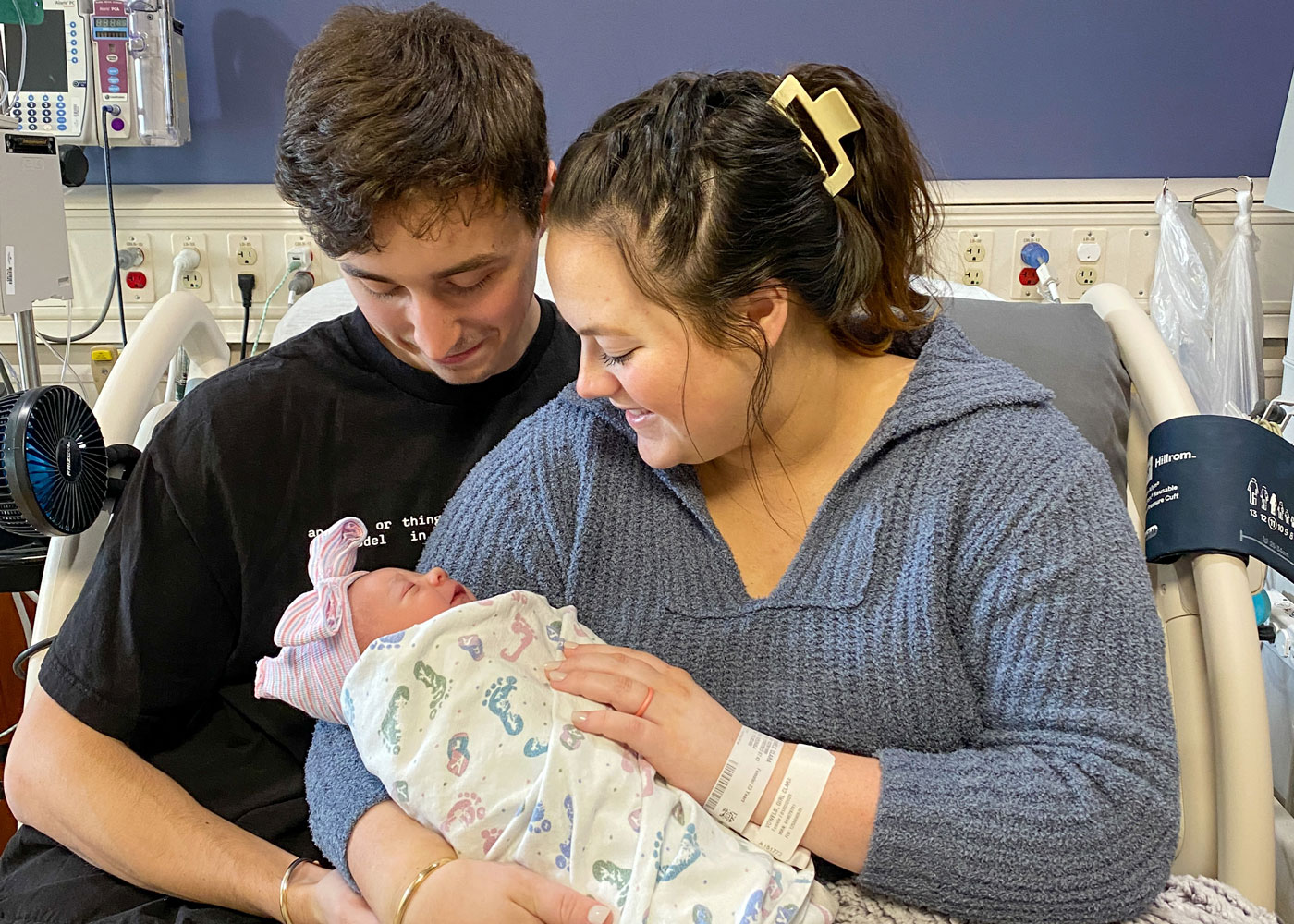
    Sawyer Ann Karinen was born at 11:39 p.m. on January 2, 2023. She is the daughter of Clara Vowels and Andrew Karinen, residents of Heber City. Sawyer weighed in at 6 lbs. 5 oz. and is 19 inches long. She is Clara and Andrew’s first child.

    “I can’t believe she’s mine,” said Clara, Sawyer’s mom. “It was a long day of almost 20 hours of labor, but she’s definitely worth it.”

    “It’s hard to put into words,” said her father, Andrew. “We’ve both worked in daycares, so we have lots of experience with kids. But they go home at the end of the day. It’s so crazy we’re taking this little one home with us.”

    Along with her first baby status, Sawyer also received a prize basket of baby goodies from Intermountain Healthcare to celebrate the birth at Heber Valley Hospital, which included generous donations from three Utah-based baby product vendors: Minky Couture; Loulou and Company; and Over the Moon.

    “It’s always exciting to welcome our first baby of the year,” said Kam Wright, Heber Valley Hospital nurse manager, women and newborn services. “They’re a darling family and it was the perfect wintery welcome for Sawyer.”

    Heber Valley Hospital is a 19-bed hospital and has been serving the Wasatch County area since 1999. More than 200 babies were born at Intermountain Heber Valley Hospital in 2022.

  • Built to Ride

    Built to Ride

    It’s no secret that one of the greatest, most tangible benefits to living in or visiting Wasatch County is the proximity to high-quality, sustainable trails.

    Whether you consider yourself a hiker, a mountain biker, an equestrian, or just someone looking for great views in Heber Valley — you know our trails are amazing — but have you ever wondered how the trails you use came to be?

    THE BEGINNING OF IT ALL

    In 1992, the Mountain Trails Foundation was established in Park City at a time when all local hand-cut trails were on private land. Their team and board worked with developers and private landowners to advocate for creating more non-motorized trails across Park City.

    The same energy, desire, and opportunity for a hand-cut trail system existed in Heber Valley, but without any formal organization to get it off the ground. A group of dedicated individuals, including Carol Potter, a Heber Valley resident and former Executive Director of the Mountain Trails Foundation, and Don Taylor, took on the challenge by founding the Wasatch Trails Alliance. They began heavily advocating for trails in Wasatch County with a focus on soft surface, single-track style trails. But, due to being largely run by volunteers, the organization eventually paused operations as the founders focused on other initiatives.

    Luckily, the light of the Wasatch Trails Alliance never fully went out. Together, Perry Dickson, the owner of Slim & Knobby’s Bike Shop, Eric Porter, a local professional mountain biker, and other current board members took the Alliance through a rebranding and relaunched a few years ago with a new website, now doing business as Wasatch Trails Foundation.

    “That original group basically came in and breathed new life into the organization. They brought in new donors, new blood, and started looking at new projects,” said current Foundation director, Scott House.

    “This was right about the time that the WOW (Wasatch Over Wasatch) trail was coming out of concept into something that could be a reality. That was really where Wasatch Trails Foundation hit the ground running — working with Wasatch Mountain State Park and Mountain Trails Foundation to get the WOW Trail as we know it today built and in place. That really was the proof that this can be successful. We can do this as a group of volunteers. And that there’s a high demand in our valley for trail work and trail advocacy.”

    BLAZING NEW TRAILS:
    START TO FINISH

    From ideating and designing to funding and building, you might be surprised to learn just how much goes into bringing the trails we know, use, and love, to fruition. Let’s start from the beginning.

    1 IDEATION

    “Everything starts from an idea — whether that’s an idea from a board member, community member, or one of our partner organizations — be it Mountain Trails Foundation, Wasatch Mountain State Park, or another,” said House.

    2 DESIGN

    The next step is to pressure test if an idea can live as a legitimate concept. The Foundation determines if they can move from the idea phase to designing by heavily examining local maps and putting down lines and markers to determine what terrain is available. The Foundation then consults with partners and community members to continue determining the viability of the design.

    3 COST

    Once the initial design is mocked up, the next step down the funnel is going through the costing process — pricing out each step, including rough estimates for using professional trail builders, creating signage, and more.

    4 APPROVALS

    With a solid dollar amount in mind, the Foundation moves to get approvals from their board on where the trail’s going to go in Wasatch County and where it’s going to cross through. Then, they talk with respective landowners, land managers, and state and national environmental agencies for full approval to move forward.

    5 GRANT WRITING

    After design and budget approvals, the real action begins — finding funding for the project in mind.

    House explained, “We start looking for different grant resources, both locally in the state of Utah and nationally. Most of the grants that we have written, or wrote as of late, have been through the Utah Office of Outdoor Recreation, which is under the Governor’s Office of Economic Development. And those grants can cover up to 50% of the cost of the total project.”

    The other 50% is typically matched by fundraising efforts locally and through partners.

    6 TRAIL BUILDING

    Once the grant is awarded, that’s when the work can really start of building a trail. The Foundation begins by flagging the corridor.

    “That means we’re out in the woods, walking through the hills, tying nylon flagging on trees, shooting grades, avoiding sensitive areas, and all the things we need to do to get that trail alignment,” said House.

    Next comes clearing the corridor of trees and brush with the help of volunteers and paid professionals to prepare for building out the trail. House stated that, “Wasatch Trails Foundation has taken the stance that hiring professional trail builders — who this is their career, this is what they focus on — really produces the best product. They build that trail [from] start to finish and are all polished up. Once it’s in, we take all that information and we report that to our grant: this is what we’ve completed, it’s all done, here are pictures, here’s how everything went. We show them all the money we spent. And then the grant reimburses all that back to our organization.”

    The Foundation currently has two grant-funded trails in the works: one on schedule to be completed by June 15, 2022 and another trail that will break ground this summer with a target completion of fall 2022 or summer 2023.

    Supporting Wasatch Trails Foundation’s mission of creating, supporting, and preserving a sustainable, non-motorized trail system in our community is simple and customizable.

    1 Become a member

    Membership levels include: business/corporate for $200/year; couple for $60/year; household up to 6 people for $110/year; and individual for $35/year. A sustaining member is $15 every month, ongoing.

    2 One-off donations

    Make a donation to Wasatch Trails Foundation in any amount (one-time, monthly, quarterly, semi-annually, or annually). You can also choose a campaign (i.e. Winter Grooming) to dedicate that donation to.

    wasatchtrails.org


    A FIRST FOR UTAH STATE PARKS

    When asked what project has been closest to the heart for members of the Foundation, House says the Pike Canyon Bike Park comes to mind first.

    Considered a big feather in their cap, the Pike Canyon Bike Park was not only the first bike park facility in Wasatch County, but it was also the first in a state park in Utah. Generously supported by local donations and a grant supplied by the Utah Office of Outdoor Recreation, the project set a precedent for using grant funding to build high-quality projects that not only benefit the Heber Valley community, but also help advance Utah state parks into a modern era of supplying the state park’s clientele and visitors with the amenities they’re now looking for.

    “[Pike Canyon] has the mountain biking and hiking experiences and all these things that the modern recreationalist is looking for. That project was extra special for the group.”

    TO INFINITY (SALT LAKE COUNTY) AND BEYOND

    Last year, the Foundation was awarded grants for the BO to WOW Connector: a project with the goal of connecting the upper part of the WOW Trail into the Bonanza Flat Loop, which is in the Bonanza Flat Open Space. It’s a 1200 acre parcel of open space owned by Park City and under conservation easement with Utah Open Lands. Currently, Mountain Trails Foundation is building hiking trails, biking trails, and multi-use trails up there. Wasatch Trails Foundation is building a 3 to 4-mile section of trail that will connect into the Upper Trail System to the top of the WOW Trail.

    “Once that 4 mile piece of trail is in, you have a true single-track route where you can leave from Wasatch County and ride all the way up and over the Wasatch Crest and into Salt Lake County. You’ll pass through Wasatch, Summit, and Salt Lake Counties and you’ll never really have to ride on a road, other than crossing a road to connect into another piece of trail. It’ll be a full single-track connection from valley to valley. It’s really a special piece of trail,” shared House.

    COMMUNITY OUTREACH

    Wasatch Trails Foundation has an incredibly bright future as it continues to work every day to improve and expand on the unmatched outdoor recreation opportunities for everyone that visits and calls Wasatch County home. The Foundation sees the local community as an integral piece of its past, current, and future successes. But, building a strong, passionate trails community requires hearing the voices and desires of all involved.

    House said, “One of our main focuses of 2022 is community engagement . . . and trying to listen to and figure out what our community wants. Where does our community see a need and how can Wasatch Trails Foundation meet that need? We don’t want to sit in our own echo chamber, thinking we’re the only ones with good ideas, assuming we know what everybody wants. We want to hear from our community.”

    The Foundation hopes to expand its donation base to help bring in the additional funding needed to go after bigger grants to expand our trail systems, maintenance programs, and provide better trail connectivity. House states that “As we work through the next 5, 10, 20 years, we have a lot of potential for big projects in Wasatch County. But without the support and engagement of the community, it’s really hard to get those projects off the ground.”

    Next time you’re out enjoying one of our many wonderful trails, take a moment to remember the visionaries, volunteers, and donors behind Wasatch Trails Foundation and the incredible amount of work involved in creating the means for all to get out and explore the beautifully scenic space we call home.

  • Putting Growth and Education to the Test

    Putting Growth and Education to the Test

    Wasatch County residents have earned what seems like a doctorate in dealing with growth, but channeling change is a never-ending process that seems to be as challenging as the teenage years. Just like that awkward, formative, and stressful stage of life, Wasatch County has a lot of current issues: traffic, taxes, affordable housing, water, air quality, the airport, public safety, and on and on and on. (Take a deep breath — it’s going to be okay.) With growth being the proverbial issue on every local campaign, and education always being a high priority to the community, the Wasatch County School District School Board has set out to develop a 10-20 year master plan while pursuing citizen involvement. This planning process has been named “Future Schools Project” (FSP). In 2021 WCSD held a multi-step interview process in hopes of hiring a consultant team. With an impressive presentation and an exceptional resume of projects and values, GSBS Architects, in Salt Lake, was selected to direct this process of determining educational goals, assessing the facilities, and recommending future options.

    Last fall, 489 registered voters responded to a community survey issued by Y2 Analytics. All results can be found on the FSP website (futureschoolsproject.com). The question is not if we will need more schools, but why, where, when, and most importantly how. One key finding from the survey showed that Wasatch County residents find fiscal responsibility (91%) and transparency (87%) “very important”.

    According to the FSP website, “The Wasatch School District administration and Board of Education are committed to a master planning process that prioritizes listening to parents, students, and community members. Our Master Planning Goals are: Be innovative and forward-thinking as we plan for growth, Ensure that students reach their personal goals and become productive contributing members of society, and create solutions that are efficient and financially responsible.”

    The FSP is a simple concept yet has detailed steps and multi-involved phases that have been taking place since September 2021. Phases include: gathering information, generating options, reviewing with the public, and finally the master plan draft presentation at the school board meeting on April 21, 2022. As part of community engagement, three committees were formed to help consult, frame, and direct this process; an educators committee (teachers and administrators), an advisory committee (elected officials of local jurisdictions and leaders of community organizations), and a steering committee (constituents selected by school board and district administrators). The FSP team has tried to give the community as many opportunities as possible to voice opinions, share ideas, and ask questions. There have been surveys, neighborhood meetings, and a special website with a place to “join the conversation”. It is always possible to email or call board members and district personnel. Contact information can be found at wasatch.edu.

    Part of the process also included an assessment, completed in December-January, of current school buildings and facilities. The project team analyzed safety and maintenance issues; and explored whether or not buildings were meeting the education visions gathered from the prior input of the committees.

    Building “Bridges” to Future Schools

    This project comes on the heels of the 2019 bond failure.  It was an emotional campaign with frustration and passion from both proponents and objectors. The final outcome showed 57% voting against and 42% in favor.

    Superintendent Paul Sweat explains, “The Future Schools Project is the Board of Education’s response to the community asking to be more involved in the planning process, as well as to the rapid growth that we are experiencing in Wasatch County and within the District. Based on continual updates from District Staff, they know our buildings are at — or over — capacity, and we are in need of a long-range plan to address the growth, which shows no signs of slowing down, based on data from local agencies gathered by our demographers, Davis Demographics.”

    Findings from the community survey referenced above, show how growth and education are perceived in the valley. 67% believe that the county is growing “much too quickly” along with 82% agreeing that public education is “very important to the health of a community”. Community involvement is also “very important” to 67% of those who participated in the survey.

    Sweat reflects, “It’s been eye-opening to see the engagement and enthusiasm for the process from within our District and throughout the community. We’ve long heard that our constituents want to become involved in our District; now they are actively participating in the process through committees and community meetings. Our visits to school staff meetings were very productive in gathering information for us to share with our consultant team, GSBS Architects, and allowed teachers and staff to candidly share their thoughts and concerns.”

    April: Enroll in Civil Engagement 101

    Although much has happened in the past six months, the next two months are even more crucial and exciting. All the effort and hard work will culminate at a public open house on April 7th. A final master plan draft will be shared at the school board meeting on April 21st. Look for details to be announced soon on the district website (wasatch.edu) or the Wasatch County School District’s Facebook page.

    “The Open House on April 7th will provide the public with an opportunity to view the recommendations from GSBS, which will incorporate the information they’ve gathered during their months-long process. It will be a chance for folks to weigh in on the possible next steps in addressing growth within our District,” says Sweat.

    Lindsey Ferrari, the public outreach consultant for GSBS Architects, explains, “This master planning process is designed to identify the public’s vision and values for education through a set of guiding principles; assess how the district’s facilities and buildings are performing now and how they will perform with future growth projections; then give the public some options for addressing growth based on the public’s vision.  Those options will be presented to the public for feedback at the open house in April and through other various methods such as the District website and smaller group meetings.  It’s important for residents to get involved in April and let the school board and consultant team know which options they want to accept as a community.” Ferrari continued by stating, “I’d also like to add that the master plan will not dictate where and what a new school or expansion might look like, but rather when the board should consider taking action based on pre-determined milestones regarding growth or building condition. So the public should be on the same page as to when and how the District will address growth.”

    Just like a high school graduate that made it through those tough and fun teenage years, the future holds many possibilities and educational options for Wasatch County. Now is the time to take the opportunity to be a part of the vision and decision-making process for future schools. The next few weeks will advance the goal of addressing and managing growth and education in positive and intentional ways.

    Sweat concluded by stating, “It’s crucial for our community to know we are working diligently to ensure our learning environments will provide the best possible achievement outcomes for the students of Wasatch County. Whether that takes the form of updated or new buildings will be determined by the FSP process and our much-anticipated Facilities Master Plan.”


    Learn more and get involved FUTURESCHOOLSPROJECT.ORG

  • Defending Wasatch Back – Wasatch County 2A Sanctuary Initiative

    Defending Wasatch Back – Wasatch County 2A Sanctuary Initiative

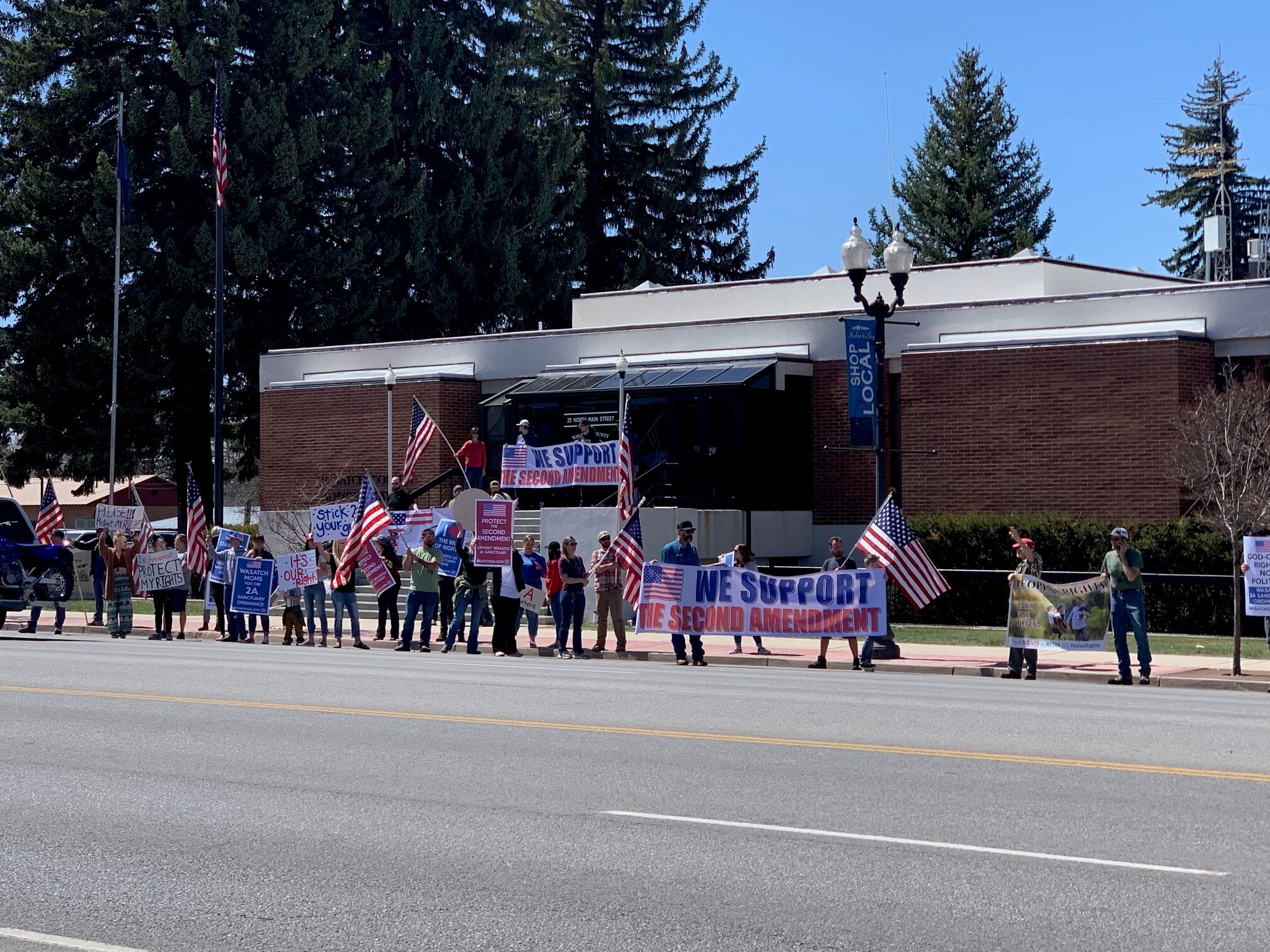
    If you’ve driven by the Wasatch County Administration Building on Main Street in recent weeks you may have seen a bunch of people holding signs, and flourishing American Flags while waving at passersby; perhaps you wondered, “What in the world is going on over there?” The answer would be – a lot!

    Defending Wasatch Back began as a group of moms sharing their concerns while at different events with their children. As they told two friends, and they told two friends, the word got out and soon there were citizens from all over Wasatch County joining them.

    Cheryl Karl, one of the two founders of Defending Wasatch Back, shared that they started holding Monday rallies in front of the Wasatch County Administration building as a way for people to express their concerns to the public and County Council. “We asked people to leave their president flags supporting whoever they were voting for at home. We said no Trump flags, no Biden flags. This is just an American thing. We asked that members of the community bring their American flags, and any signs supporting whatever they felt strongly about.”

    The group meets every Monday during the general County Council meetings to offer support for those presenting before the council; they ask for cars to honk, as a reminder that the people of Wasatch County are here, want to be represented, and involved in decision-making processes. The goal of Defending Wasatch Back is, “. . . to gather like-minded people who are willing to take action.” Cheryl shared that, “We don’t want to sit around just shaking our heads, saying someone should do something, [we] want to make sure that people who join us are willing to write emails, got to rallies, go to peaceful protests, do something about the problem; not just shake their heads.”

    Currently, Defending Wasatch Back has combined forces with the Wasatch 2A Sanctuary group in support of making Wasatch County a Second Amendment Sanctuary. What does that mean? In a nutshell, a Second Amendment sanctuary is a state, county, or locality in the United States that has adopted laws or resolutions that oppose the enforcement of certain gun control measures. As of March 1, 2021, sanctuarycounties.com reports that there are 1,188 2A sanctuary counties, either through resolutions or ordinances, across more than 20 states. Noah Davis states on their site, “As politicians attempt to use tragedies to take rights away from law-abiding citizens, more than 37% of U.S. counties have been declared Second Amendment Sanctuaries. The Second Amendment Sanctuary Movement has kicked into high gear since the election and shows no signs of slowing down.” In Utah, Uinta County was the first to become a 2A Sanctuary county, followed by several others like; Utah, Wayne, and Weber, just to name a few.

    Gary Hughes a member of both Defending Wasatch Back and Wasatch 2A Sanctuary explained, “What the whole Second Amendment Sanctuary Movement is about, nationally, is sending a message to Washington that the Second Amendment is still important to us, we still want it, we still need it, and we’re not going to tolerate infringement of it. It’s a way for citizens of Wasatch County who largely feel ignored by their representatives at the federal level – their congressmen and senators – to be heard.”

    In August of 2020, Sandra Hughes and Ryan Hobbs started the Wasatch 2A Sanctuary group and approached City Council regarding Wasatch County adopting and putting into place a 2A ordinance. According to Sandra, the meeting went really well, there was no opposition from anyone present, and they were asked to put together a committee of council members and citizens. She explained that “the purpose of the committee is not to decide whether or not there should be a 2A ordinance – that is for the vote. The purpose of the committee is to decide on the verbiage of the ordinance.” Kendall Crittenden is the head of the committee and has worked closely with Sherriff Rigby, Mark Nelson – the County Attorney’s Representative, and committee members to create a draft that will be presented and read to the public during the County Council’s general meeting on Wednesday, April 21st at 3:00 pm. You can jump onto Wasatch County’s site: https://docs.wasatch.utah.gov/OnBaseAgendaOnline/Meetings/ViewMeeting and download a PDF of the proposed ordinance.

    Gary explained the difference between an Ordinance and a Resolution and why the wording of the document put forth for a vote is important. An Ordinance has the force and effect of a law whereas a resolution is simply a formal expression of an opinion and holds no weight. There are a lot of misconceptions out there as to what the 2A ordinance would do. Many people believe it is a way to try and get around state gun laws. That is not true. Hughes describes it quite succinctly, “As Sherriff Rigby, and the citizen’s committee has written it. The ordinance prevents county money from being spent in any enforcement of federal law as it pertains to the Second Amendment. It also prevents the county in the future from entering into a written agreement with any federal agency to do that same thing. That’s it.” He continued by stating “The ordinance also states that this does not preclude the Sherriff’s office from enforcing state law in any form. So every state-level gun law is enforceable and will be enforced by the Sherriff’s office. There is no one; the Sherriff’s office, the county, the committee, anyone that does not want people who commit a crime with a gun to be prosecuted. What we don’t want is for people to become criminals simply because they own a gun. The ordinance is clearly written with the direction of the Sherriff to specifically included state enforcement and prosecution of anyone who violates the law and uses a firearm in a criminal matter.”

    So what does all this have to do with what is going on in front of the administration building? Well . . .  in defense of protecting the Second Amendment, and adding their support for Wasatch County to become a 2A Sanctuary, Defending Wasatch Back has been encouraging citizens to join their rallies, and educate themselves on the matter. Cheryl stated that when Sherriff Rigby was asked, “When was the last time you saw 100 moms standing outside Main Street on a Monday to fight for their gun rights. He said, ‘I’ve never seen this in my entire life.’” Sandra shared that, “. . . having the group out front rallying for us or just demonstrating their support, made me bolder as I went into the meetings,” and Gary, who’s been involved in the gun right fight for nearly 30 years, stated, “I’ve never seen a group of men willing to go out and do something about their rights and individual liberties, as these women are. So, you might say I’m a fan!”

    For those who are not fans – that’s okay too! The world would be a boring place if we all thought the same. Having the privilege of living in a free country though takes work and right now, regardless of individual convictions, no one can deny that our freedoms are under attack. It is important to protect the rights of all and we do that by protecting the Second Amendment which protects the First. If the Second Amendment falls the Bill of Rights and the Constitution will follow. It is up to all of us, as citizens of the United State of America, and as citizens of Wasatch County to bring our differing opinions to the table and come to unifying agreements (even if that means agreeing to disagree) through respectful, free, and open debate.

    Hughes, I believe says it best, “I think that people who oppose this, you know they think that we’re a bunch of antigovernment wackjobs, that we’re militia people, that we’re domestic terrorists. You know all these things that the media has labeled anyone who doesn’t agree with [their narrative] . . . people have been conditioned to dehumanize us. . .  I mean it’s scary . . . all we are asking for with this ordinance is for the county to tell the world that we won’t participate in this. And that we believe in the Second Amendment. The Second Amendment is for everyone! It’s for the left, it’s for the right, it’s for brown people, it’s for white people, it’s for gays, it’s for straights, transgendered, it’s for everybody. The Bill of Rights is universal. It’s not selective. I want to protect all people’s rights just as much as my own.  I’ve always kind of taken this position in my life that if I allow the government to do something to someone just because I disagree with them, then they’re going to do it to me too. And I don’t want that. I’ll stand up for those causes, but for some reason, we’ve been conditioned to think that every infringement is okay as long as it’s for guns, and that’s really a sad thing. I wouldn’t dream of taking someone’s First Amendment rights. That seems to be the domain of other people, the silencing of other’s opinions and all that, I find it amazing that some people consider the Second Amendment or the Bill of Rights a divisive issue because it’s not to me – it’s a universal right – it’s for everyone.”

    Join other community members this Wednesday, April 21st at 3:00 pm at the Wasatch County Administration Building, 25 N Main Street Heber City, to learn more about Wasatch County becoming a 2A sanctuary and to have your voice be heard. After all in Cheryl’s words, “When we say that someone has to do something, that person is me, and you, and everyone around us, we have to look in the mirror and say no one is going to do this for us. We have to do it!”

    Interested in learning more? Visit the following: Wasatch County 2A Sanctuary Facebook page, Utah Business Revival Facebook Page, www.takeactionforfreedom.com, www.sanctuarycounties.com, and www.defendingutah.com. You can also join one of over 50 Thursday groups that meet, every Thursday all over the state to talk about concerns. Information for these groups can be found on several of the above sites.

  • Golf in the Wasatch

    Golf in the Wasatch

    Once again, it’s that time of year. The remnants of the black snow are melting leaving odds and ends of buried treasures, or bits of trash on the curbs. The birds chirp a little louder in the mornings. And blades of grass are popping up along the fairways. It’s Spring. It’s golf. It’s time.

    “Golf…is the infallible test. The man who can go into a patch of rough alone, with the knowledge that only God is watching him, and play his ball where it lies, is the man who will serve you faithfully and well”. – P.G.Wodehouse

    Perhaps you were lucky enough to spend the winter with John Paupore, the Director of Golf at Red Ledges. While Red Ledges is a private course, the winter indoor school he runs is open to everyone. The school offers both group and private instruction, and a variety of clinic programs. During the colder months you can stay warm and enjoy the scenery while you practice your shots inside; hitting balls through two garage doors that are open to the snow-covered course.

    John, a golfer since his dad put a putter in his hands at the age of seven, is feeling the opening day magic start to build. While a day on the course in spring is particularly weather-dependent, John has a smile in his voice as he talks about the start of a new season as a “rebirth of everything.” February is when everyone starts to get ready for it all to begin again. He is ready.

    There will be a concern about carts this Spring. As sanitation and safety have come to the top of everyone’s list, the four golf courses in the Heber Valley — Red Ledges, Soldier Hollow, Wasatch State Park Golf Course, and The Homestead — have all adopted special procedures to ensure golfers are comfortable.

    Chris Stover, the golf pro at Wasatch Park, knows golfers are concerned about COVID. He emphasizes Wasatch is in compliance with all state guidelines. He believes “going down the rabbit hole” to revamp his business model during last year’s pandemic season has paid off for both patrons and staff. Masks are on when in the building but not mandatory on the course. Carts are washed and sanitized; tee times are spread out to allow golfers to be at safe distances while waiting to tee off.

    Spring brings a new crop of golfers to the Heber Valley courses. While there are always familiar returning golfers, Chris Newson, pro at Soldier Hollow, thinks he will see more golfers this season as everyone has spent the winter cooped up. While the courses in Wasatch County regularly see destination-oriented golfers and those coming from Salt Lake City, Chris anticipates welcoming a new crop of golfers looking to escape the indoors. Work will be starting soon to get both the Gold and Silver courses at Soldier Hollow in shape. For those unfamiliar with the courses; Soldier Hollows Gold Course is a mountain course with significant elevation change throughout the course and within each hole. The Silver Course is a more open, parkland-style course with shorter and wider fairways, and an amazing view of Mount Timpanogos.

    Not only is spring a time to work on your swing, but it is also a time to see old friends and do a little of everyone’s favorite winter sport “bench golfing”. Spring fever ramps up as the PGA Tour starts, and once the winter weather breaks it is full speed ahead.

    Soldier Hollow is a public State-run facility and follows all guidelines and mandates issued by the State for a safe and fun environment. While 2020 was a year in flux, Chris is confident that his teams are well-prepared to meet the new season.

    The start of the golfing season provides a wonderful opportunity to go shopping for: new shirts, new clubs, new shoes and of course a new golf hat. Mike Jurca, head golf pro at The Homestead, is looking forward to the pro shop, cart barn, and locker rooms, receiving a face-lift in the near future. New ownership in the last 15 months has committed to setting The Homestead apart from other public courses. Their goal is to create a high-end experience at a reasonable price for the public course golfer as well as provide a high-end resort experience for guests.

    Even though the weather is hit and miss, Mike says the phone starts ringing towards the latter part of winter. Golfers are looking for opening dates or trying to secure that first tee time before the spring green has sprung.

    How do those greens stay so beautiful? While many of us are still on the ski slopes, the golf courses are getting ready for a spring opening. The main ingredient is not the grass seed. It is the fertilizer and, of course, Mother Nature’s contribution — water. Lots of water. Should everything turn brown, they can always paint. Yes, paint. Many golf courses use paint to deliver better fairway playing conditions while avoiding overseeding and reducing their consumption of water, fertilizer, fuel, and other resources.

    “As you walk down the fairway of life, you must stop and smell the roses, for you only get to play one round.” – Ben Hogan

    You don’t have to go to the Masters in Augusta, GA to smell the roses or view one of the greatest landscaping gifts we’ve ever been given. Each year the majesty and natural landscape of Wasatch County becomes a mecca, drawing thousands of golfers from around the world — this is their place of choice.

    Golf is a game of integrity. And bonding. Friendships made on the green have lasted for decades and lifelong golfing partners have been created on every course. Business deals are solidified. And special bonds between family members are formed.

    It’s Spring. It’s golf. It’s time.

    Time to reconnect and renew. Time to take a lesson. Time to get out on the fairways, take off that mask, and shout “I love this game!”

  • Free Rapid Covid-19 Tests offered in Heber

    Free Rapid Covid-19 Tests offered in Heber

    TestUtah will be providing free Covid-19 Rapid Antigen tests in Heber City. The drive-through tests will be available on January 11 from 8:00 am to 3:00 pm and January 12 from noon to 7:00 pm. The testing center is located at the Wasatch County Events Center. The Antigen tests can be completely processed in only 15-20 minutes.

    These tests will be provided free to anyone, regardless of symptoms or insurance. Anyone interested in participating in the free testing should go online to www.testutah.com. Participants are asked a short series of questions regarding possible symptoms and exposure. They will then be able to register for a test.

    The TestUtah initiative is sponsored through Silicon Slopes, in partnership with the State of Utah and private corporations. The goal of the initiative is to “dramatically increase the rate of COVID-19 testing” by providing free tests to all Utahns. All testing and equipment is provided by the State of Utah. However, many of the staff members are working as volunteers. In addition to Silicon Slopes, several other companies have also contributed, including Qualtrics, Domo, and ATL Technology.

    Wasatch County School District is encouraging members of the community to take advantage of the free testing. A recent post on the District’s Facebook page read, “As we wind down from the holiday break, we hope this free testing opportunity will help quickly identify new cases and prevent the spread of COVID-19 in our schools.” Free testing is always available to students at a site on the West Campus near Wasatch High School.

    According to TestUtah, “Widespread testing is a proven, effective way to combat the spread of COVID-19.” Testing across Utah enables greater tracking and containment of the virus. This will “help stem the spread of COVID-19, to get us back to normal as quickly as possible.”

  • 10 Reasons to Love 2020!

    10 Reasons to Love 2020!

    Goodbye 2020. Don’t let the door hit you on the way out!

    We have been barraged with negativity about the year 2020. True, there were some bad things that happened this year. Okay, a lot of bad things. However, there’s always another side to the story.

    10 reasons to love 2020:

    1. The kids got more sleep.

    Really, sleep has so many health benefits. So, when the kids all came home from school permanently in March, definitely a shocker, they were probably completely sleep deprived from years of waking up at unearthly hours to catch the bus or make it to school before the tardy bell. So, thank goodness they could finally sleep in, day after day, week after week, and get caught up!

    2. The adults got to work from home.

    We all had SO MUCH extra family time in 2020. Everybody was able to spend 24/7 with his or her significant other and children. We had breakfast, lunch, and dinner together. Mornings, afternoons, and evenings together. Wasn’t that fun?
    3. The environment received a much-needed break.

    Were there really dolphins in the canals of Venice? It was on Facebook anyway.

    4. We had a mini, preparatory earthquake.

    All those years of trying to get people to take the big one seriously finally paid off. And we switched out the size 2T clothes we had in our 8-year-old’s 72-hour kit. And got new granola bars.

    5. The government handed out free money.

    We don’t know where it’s coming from, but hey, free money! Who knew the government could just print whatever money they want? Maybe we should just print our way out of the national debt too. So many possibilities here!

    6. The presidential election is over.

    Or is it? Just kidding. Whether your first choice won or not, I think we can all agree that at least, for the most part, hopefully, it’s over, and we don’t have to watch any more debates.

    7. We had a preview of what things will go first in emergencies.

    I, for one, am buying an extra package of toilet paper every time we go to Costco from here on out. And water bottles. And maybe some yeast and flour in case there is no food, and I need to learn how to make bread. And whatever they make Oreo cookies from. Let’s stock up on that too. And maybe plant a cacao tree.

    8. We realized other counties are jealous of Wasatch.

    Remember when the Governor said Utahns could only recreate in their own counties? That was awesome! Could we make that an annual thing?

    9. The shelters ran out of dogs!

    Awwww…So many pets found new homes. And they were taken on walks all the time. And their owners got more exercise too.

    10. ESPN showed the Cornhole Championship, old spelling bees, and the NBA players in a super-competitive game of HORSE.

    Ha. That was super entertaining. I’ve never seen a huge, billion-dollar, maybe trillion-dollar, network scramble more. I can only imagine what the network meetings were like. “Ummm…We could have the NBA players compete in a game of HORSE.” Silence. The president of ESPN starts to cry.

    Bonus: We learned to be more resilient and thankful.

    Seriously, we all received a much-needed course in resilience. And we realized how many things we’ve been taking for granted. The Covid pandemic knocked us off our feet. Will we come back stronger and more prepared?

    We badmouth 2020 like it was the worst thing ever. Covid has been devastating for communities and families. We have lost almost 2 million people worldwide. It’s unquestionably a tragedy.

    However, the Spanish Flu, the one that our pandemic is sometimes compared to, happened at the same time as World War 1. Can you imagine how difficult that would be? It’s estimated that 20 million to 50 million people died worldwide from that flu, in addition to the 16 million who died in the war. Some estimates have Spanish flu deaths as high as 100 million because of difficulties in record keeping. Could we have handled that?

    2020 brought with it plenty of trials, but also amazing advances in science and worldwide cooperation to stem the tide of this most-recent pandemic. 2020 was amazing in so many ways. Plus, now we have bragging rights to talk forever more about how we handled the pandemic of 2020, how it affected our lives, and how it made us stronger, more creative and innovative, and better able to handle challenges in the future. We’ve got this! Bring it on 2021!

    Kidding. We don’t actually want 2021 to bring on anything. But if it does, I have lots of Costco toilet paper in the garage.

  • Nutcracker Tea Raises Money for Children’s Justice Center

    Nutcracker Tea Raises Money for Children’s Justice Center

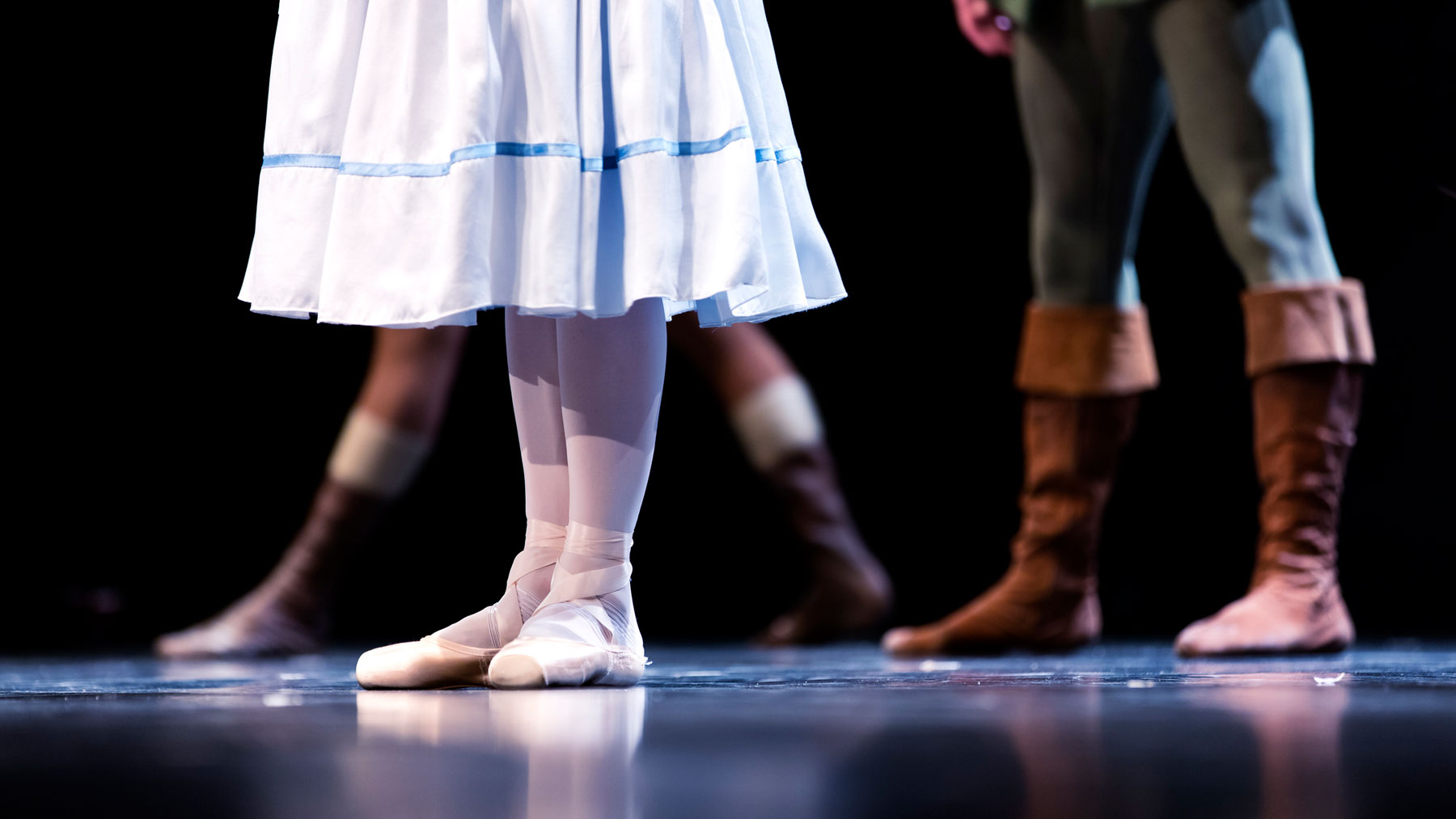
    The Wasatch Dance Center Foundation’s Nutcracker Tea was held December 35 as a fundraiser for the Children’s Justice Center (CJC). The foundation normally puts on several benefit performances of the Nutcracker each December. They brought in $14,500 for the CJC in 2019. This year, the full-length show was unable to be performed because of Covid-19 restrictions.

    Instead, the Nutcracker Tea became a bigger, more involved production, with Zermatt Resort donating their Bernese Event Center. The group performed a 35-minute Nutcracker ballet with narration. The Nutcracker Tea also included sweets and a fun Christmas atmosphere for the four performances. Approximately 800 people attended.

    Accommodations were made at the event to protect against Covid-19. Tables were spaced apart, and patrons were able to purchase seating for an entire table to keep familiar groups together.

    Several sponsors participated in staging the event, including Lee’s, Kneaders, Suss Cookies, and Spin Café, along with many others. “We’re so grateful for the sponsors to be able to make it happen like it did,” said parent volunteer Corine Cook. “The community came through for us and helped us make it pretty awesome. This year’s event raised even more money than usual for the Wasatch County CJC.

    The Children’s Justice Center is a child-friendly interviewing facility set aside for abused or otherwise mistreated children. Interviews are recorded and given to law enforcement and child protection workers. Referrals are made for follow-up services. Aid is also considered for those in need of aftercare services.

    According to Kenna Jones, Director of the Wasatch County CJC, “It’s just a team effort to help the kids through that process. . . . It’s a one-time thing, where everyone comes to the child, instead of the child going a whole bunch of places to relive the trauma.” Last year, the CJC interviewed about 100 children. Currently this year, about 160 cases have already been processed through the Wasatch County center.

    The Children’s Justice Center cancelled their popular gingerbread fundraiser this year. However, in addition to the Nutcracker Tea donations, the center also received a grant from the Heber City CARES funds to help with operating costs for this year.

  • Booming Real Estate

    Booming Real Estate

    Utah ranked number one in Best Economies Nationwide.

    Utah has the highest Employment growth in the Nation.

    (https://247wallst.com/special-report/2020/08/25/the-states-with-the-best-and-worst-economics-4/1/)

    Utah ranked as the second happiest state and ranked number one for community and environment and work environment.

    (https://wallethub.com/edu/happiest-states/6959)

    The questions over the housing market linger, but the fact of the matter is there has never been a better time to sell, buy, or refinance.

    In early March 2020, we all received a crash course on COVID, whether we liked it or not. As quarantine, business shutdowns, and required masks became the new norm; it became abundantly clear how reliant we all truly are on each other. Assessing the four necessities of life became front and center: food, water, clothing, and shelter (and apparently toilet paper).

    For most, the worry of whether their job would be considered “essential” was front and center. For me, as a Real Estate Agent, I certainly had this concern. In an industry that already ebbs and flows, a pandemic could have unheard-of consequences for the industry. Initially, early Spring Real Estate went on hold. All phone calls stopped, sellers began to take their homes off the market, and renters stopped paying their rent. Clients pulled out of escrows, deeming it a win to walk away from $10,000-$15,000 earnest money rather than risk the possibility of losing out on a lower price point later. Everyone was trying to predict the future to know what the housing market would do. In my industry, though, we don’t predict the future; we just do the best with what’s happening to the market at the moment.

    And for that moment, it paused. However, when Utah moved from Red to Orange, the Real Estate Market, especially that of the Wasatch Front, was an unforeseen boom.

    Some of the “consequences” of COVID actually brought about some amazing silver linings for the state of Utah. These silver linings led to a housing market perfect for buyers and sellers:

    There was a new realization that people could productively work virtually from anywhere. Avoiding other people and crowded areas was the new norm. Many in big metro cities saw Utah, with its booming economy, historically low unemployment rates, a backdrop that rivals the best in the world — and according to a recent article in Utah Business, a now cleaner air quality — as a top spot to relocate to. (https://www.utahbusiness.com/air-apparent-improving-utahs-air-quality)

    Interest rates dropped to an all-time low. Interest rates on a typical 30- year mortgage dropped (and currently remain) well below 3%. Many areas are seeing a record decrease in inventory, which creates a very competitive market. If you are purchasing a home, expect to be one of multiple competitive offers and expect your closing to be longer than usual. Some lenders are asking for 45 plus days to close a new loan. Lenders are flooded with business, and many are focusing primarily on refinancing existing loans versus new loans. However, there are competitive lenders out there. Ask a Real Estate professional for assistance in locating them.

    Many Utah schools planned to reopen come fall, which perked a lot of interest in the late summer months! Schools reopening became especially attractive to residents of states like IL, NY, and CA who have stricter COVID policies in place. Even within our own state, people in the more congested areas of Utah had Wasatch and Summit Counties on their radar for potential moves.

    There is no doubt that the events of 2020 will go down in history books and the suffering that COVID caused right along with it. However, one thing that never fails is Utah’s resilience.

  • New Covid Restrictions Mandated for Wasatch County

    New Covid Restrictions Mandated for Wasatch County

    Utah’s government launched a new “Level of Transmission” index on Tuesday. It will provide a more scientific way for assessing each county’s Covid situation, along with new restrictions created to fight the current rise in cases. Color-coded guidelines are discontinued. 

    Wasatch County is one of six Utah counties currently on “high transmission” risk. Levels will be reassessed weekly. They are determined by looking at case rates per 100K, percent of test positivity, and statewide ICU usage.  

    The Governor did not enact a statewide mask requirement, as some have asked him to do. However, masks are required in the “high level” counties and in the “moderate” level until 10/29.   

    The new guidelines emphasize care being taken during casual gatherings between family and friends. These small social gatherings are considered to be one of the main causes for the current high numbers in Utah.  

    In Wasatch County, under the high designation, the following restrictions are now in place, according to coronavirus.utah.gov:  

    1. Casual social gatherings are now limited to 10 or fewer people. This doesn’t include “formal religious services” or events “overseen by a formal organization.”  
    1. Masks are required for “public indoor settings and outdoors when physical distancing is not feasible.” 
    1. Restaurants, including bars and buffets, must maintain six feet between parties at all times (including waiting and seating areas.) 
    1. Other establishments allowing public gathering, including live events, movie theaters, sporting events, weddings, recreation, and entertainment, must require masks (performers excluded) and six feet distancing between household groups. (Rare exceptions to distancing may be requested, but are highly discouraged.)  
    1. Business owners also have additional restrictions, which are available on the website. 

    Wasatch County’s Covid numbers will be reviewed each week. The “High” transmission level may be lowered after 14 days, depending on if the county is meeting threshold numbers.  

    “Over the last 4 weeks, we’ve seen our infection rates and case counts skyrocket to the highest they’ve ever been,” said Utah Governor Gary Herbert. “It’s really time for a new game plan.” 

    Additional information is available at https://coronavirus.utah.gov/utah-health-guidance-levels/.

  • Free Family Dinner Tonight!

    Free Family Dinner Tonight!

    The Wasatch Caring Community Coalition (CCC) is giving out a free dinner tonight at their Family Dinner Drive-Thru event. The annual occurrence is modified this year because of COVID. Participants will drive to the booths, instead of walking, and will pick up dinner supplies to create a spaghetti dinner. The event will run from 5:30-7:00pm, Monday, September 21, at the Wasatch County Event Center. The free family dinner activity is an opportunity for the CCC to not only provide a free dinner, but also to educate the community about available resources in Wasatch County.

    The Caring Community Coalition sponsors this event each year during Family Mealtime Month. The coalition uses it to encourage family dinners and family togetherness. According to Trudy Brereton, who promotes health through the Wasatch County Health Department, “teenagers who eat dinner frequently with their family are less likely to use tobacco, alcohol, and marijuana.” The Stanford Children’s Health website explains that teens who eat dinner with their families also generally get better grades in school. There are similar findings with mental health. Those seeking outside help for depression, anxiety, and other emotional issues are half as likely to have family meals on a regular basis. These teens also usually eat healthier foods overall, according to the Academy of Nutrition and Dietetics.

    The Wasatch Caring Community Coalition consists of leaders and representatives from the County. These include the County Health Department, the Heber City Police Department, Wasatch School District, the Wasatch County Sheriff’s Department, Intermountain Healthcare, and others. The CCC’s goals include promoting mental and physical health, decreasing substance abuse in Wasatch County, encouraging family togetherness, and strengthening community bonds.

    The Caring Community Coalition meets each month to discuss achieving these goals. Anyone interested in participating can find more information on the Wasatch CCC website: https://utahprevention.org/coalitions/wasatch-county-caring-community-coalition/.

  • Big Hollow Fire at 22% Containment

    Big Hollow Fire at 22% Containment

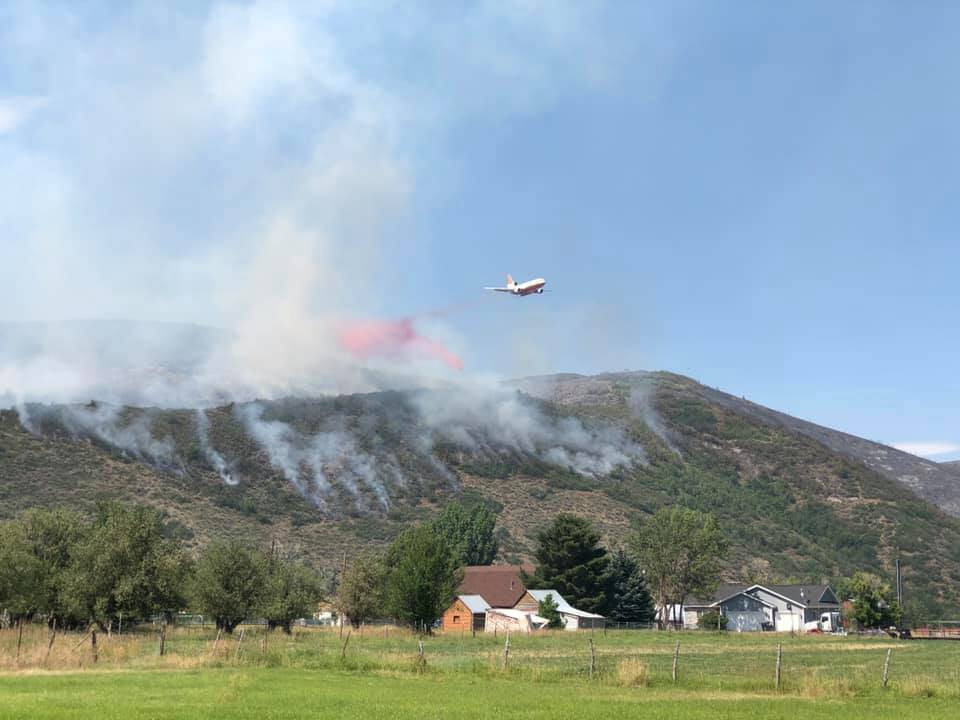
    The Big Hollow Fire continued to rage Friday, as firefighter crews worked tirelessly to protect the town of Daniel. Heber Valley residents watched as huge flames were clearly visible on the mountain Thursday night. Big Hollow Fire had consumed 418 acres and was 22% contained by Friday evening.

    It began at around 4:30 pm Thursday afternoon, just above the Big Hollow Shooting Range. The specific cause is still under investigation. It was determined to be a human-caused fire, based on lightning maps of the area. Those responsible could face criminal charges. There also may be civil penalties to pay for the expensive firefighting operation.

    Mandatory evacuations were ordered at about 10:15 pm Thursday for part of Little Sweden Road. However, the order decreased to voluntary evacuations at 11:30 pm. The voluntary evacuations included from 1200 E. to Daniels Road.

    Winds, steep terrain, and poor access made it more difficult to fight the fire on Thursday. But, according to Mike Eriksson of the Division of Forestry, Fire and State Lands, the firefighting effort was “looking good” on Friday afternoon. “The firefighters did an incredible job today to meet the objectives we set,” said Eriksson. He called it a successful day and said that the favorable weather conditions helped.

    The assault on the Big Hollow Fire has involved at least 90 personnel, 9 engines, 2 hand crews, and multiple aircraft including Heavy Tankers and Helicopters, according to the Wasatch County Fire Facebook page. The Fire Department is asking the public to stay out of the area and keep drones away. One drone will shut down the air attack and slow containment of the fire.

    The Heber Valley community has helped with spontaneous offers for animal lodging and housing for evacuees. The Utah Red Cross also set up an Evacuation Center in the LDS meetinghouse at 2285 S. Daniels Rd.

    Follow the Utah Fire Info twitter page for updated information: https://twitter.com/utahwildfire?lang=en

  • Wasatch County Fair (2020 version) is On!

    Wasatch County Fair (2020 version) is On!

    The Wasatch County Fair will be held August 5-8, 2020. Although this year will be different from past events, the organizers have come up with some unique, safe ideas for family fun!

    “We have great events and activities planned for Fair Days this year,” says Amaria Scovil, Director of the Wasatch County Recreation Center. “There is a free drive-in movie night with popcorn to kick off the fair on August 5th, and to wrap it up on August 8th, we’re throwing a tailgate concert and BBQ, followed by fireworks.” In between, there is so much more!

    The free Drive-in Movie on August 5th will show “A Dog’s Journey.” The gates at the Event Complex will open at 7:30pm, and free popcorn will be provided, while supplies last. There will also be a short video to recognize the Wasatch High School 2020 Seniors, prior to the movie at 9:30pm.

    The free Fun Run will be held on Thursday, August 6th, and can be completed anytime between 7am and 7pm. Participants can walk or run the 2 miles up Memorial Hill. Pre-registration and face masks are encouraged. New participants will begin the run every 10 minutes to allow for social distancing. Prizes will be given for social media posts.

    The County Fair will also include pre-registered outdoor family games, including a power-wheels race, a foul shot competition, and a stick-horse barrel race.

    The Jr. Livestock Show, including lambs, swine, and beef, will run throughout the fair. The sale will be held on Saturday, August 8.

    “Wasatch Has Talent” videos and County Fair exhibits will be submitted online. 4H exhibits will be dropped off in person. Exhibits will be judged and posted on the website for viewing beginning on August 4. Links for all three types of entries can be found below.

    The Wasatch County Fair 2020 will end with a tailgate concert and BBQ at the Event Complex. The BBQ will run from 5:30-7:30pm, at $6 a plate, and will be limited to the first 1,000 people. Tyke James and the Moss will then open the concert at 7pm, with Charley Jenkins headlining at 8pm. The Horse of Many Colors Balloon Launch will follow at 9:30pm, and festivities will culminate with fireworks at 9:45pm.

    For more information, please see https://www.wasatchcountyfair.com/

    Talent video submissions can be made here: https://www.wasatchcountyevents.com/p/fair-days-new/activities/talent-find

    Open Class Exhibits can be submitted here: https://www.wasatchcountyevents.com/p/fair-days-new/activities/exhibits

    4H information can be found at this link: https://d38trduahtodj3.cloudfront.net/files.ashx?t=fg&rid=WasatchCountyEventsCenter&f=2020-4H.pdf

  • Utah Lt. Governor Spencer Cox Visits Wasatch County

    Utah Lt. Governor Spencer Cox Visits Wasatch County

    The lieutenant governor and GOP gubernatorial candidate Spencer Cox, along with his running mate Utah Senator Deidre Henderson, stopped by the Spin Cafe in Heber City on Wednesday to meet with local residents. The event provided an opportunity for Cox and Henderson to discuss issues important to Wasatch County. Cox also visited the Kohler Dairy Farm earlier in the day.

    A native of rural Fairview, Utah, Cox has made it a goal to visit each of Utah’s 248 cities and towns during his campaign for governor. He currently continues to reside in Fairview, commuting 200 miles almost every day to work in Salt Lake City. One of his main priorities is strengthening rural economies.

    Cox discussed the growth-related challenges that rural Utah is facing and emphasized that infrastructure must be in place ahead of growth to manage growth more effectively. “There are a couple of things that are really important, and one is we want to maintain our quality of life, … and when infrastructure precedes growth, the quality of life stays high. Where growth precedes infrastructure, the quality of life goes down,” according to Cox. He added that the type of growth and where it happens is also important. “For example, we need localized opportunities,” he stated. However, Cox mentioned that the ability to work from home more, due to the COVID pandemic, has had its own benefits. “That is one way to change growth patterns,” he suggested.

    When asked about the balance between strengthening rural economies and preserving open space, he said that “the best way to preserve open space is to work with agriculture and make sure that our agricultural communities can succeed.” He mentioned the many dairy farms that used to be in the Heber Valley, of which there are very few left. “There are things we can do to preserve [those lands] for future generations and keep farming happening. . . . Making sure food is produced [in our state] is critical, and that’s one way to preserve open spaces.” Cox said that they are working with the agricultural community to incentivize farming, thus encouraging land to be passed down to later generations without being developed.

    COVID-19, mental health, and education funding were also among the many topics discussed at the event. To learn more about the lieutenant governor’s initiatives for Utah, go to: https://ltgovernor.utah.gov/

Translate