

Imagine climbing a mountain with no trail markers, no map, and no idea how far you’ve come. Every step would feel uncertain. You might be making incredible progress, but without a point of reference, you would never know.
That’s exactly how many people approach their health and fitness.
They begin exercising with great enthusiasm. They start eating healthier. They spend hours in the gym or on the trail. Weeks or months later, they wonder, “Is this even working?”
The problem isn’t always a lack of effort; it’s a lack of measurement. Without establishing a baseline, there’s no objective way to know whether your hard work is producing the results you want. The scale may go up or down, and your clothes may fit tighter or looser, but those changes alone don’t reveal whether you’re losing body fat, building lean muscle, or moving in the wrong direction.
One of the core principles of Adventure Your Potential is Effort. But effort alone isn’t enough. Effective effort is intentional, focused, and measurable. When you establish a starting point and consistently track your progress, you gain the insight needed to adjust your training, refine your approach, and ensure that every step moves you closer to your goals, not simply keeps you busy.
Every Great Coach Starts with a Baseline
Whenever I begin working with a new client, whether they’re preparing for their first 5K, an ultra-marathon, a collegiate athletic career, military service, or simply trying to become healthier, I don’t immediately hand them a prebuilt workout plan (because every plan I build is custom). First, I want to know where they are today.
A training program should never be based on assumptions. It should be based on facts. Just as a builder wouldn’t construct a home without first surveying the land, an athlete shouldn’t begin training without understanding the body they’re asking to perform. That baseline becomes our starting line. From there, every decision we make has purpose.
You Can’t Improve What You Don’t Measure
Many people judge their progress by stepping on a bathroom scale. While body weight has its place, it tells only a small part of the story. Imagine someone loses five pounds. Was it body fat? Muscle? Water? Without better information, we don’t know.
Likewise, an endurance athlete may train harder than ever but feel frustrated because race times haven’t improved. The issue may not be a lack of effort at all. They may simply be training at the wrong intensity, recovering poorly, or missing vital nutrients. Measuring progress allows us to stop guessing and start making informed decisions. Every assessment provides valuable feedback.
- Are we moving toward the goal?
- Do we need to adjust the training?
- Is recovery becoming a limiting factor?
These questions can only be answered if we consistently evaluate our progress.
Measuring Success Through Science
One of the greatest resources I have as an athlete and a coach is my partnership with Wasatch Optimal Wellness (WOW) Clinic here in Heber City. Dr. Ben Fogg, founder of WOW Clinic, is not only an outstanding physician dedicated to helping people optimize their health, but is also one of my personal training clients. Just as I challenge my athletes to lead by example, Dr. Fogg believes it’s important to model the same healthy lifestyle he encourages in his patients.
Together, we’ve created a system that combines performance coaching with medical insight to help clients train smarter. For clients who choose to utilize our system, the process begins with assessment and testing before progressing into training, nutrition, optimization, and recovery.

DEXA Scans: Looking Beyond the Scale
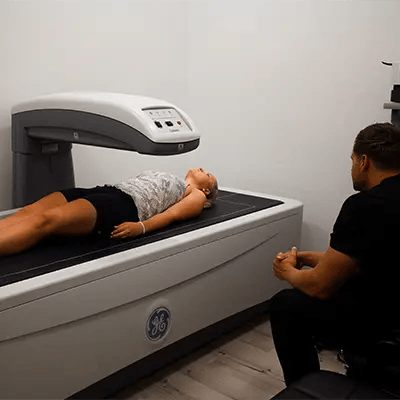
One of the first tools we use is a DEXA scan. Instead of relying solely on body weight, a DEXA scan provides an accurate picture of body composition by measuring lean muscle mass, body fat percentage, and bone density. It gives us an objective starting point and allows us to compare future scans to determine whether training and nutrition are producing the desired results.
Rather than asking, “Did I lose weight?” We can ask better questions. “Did I gain muscle? Did I reduce body fat? Is my bone health improving?” Now we’re measuring meaningful progress.
VO₂ Max Testing: Training Smarter
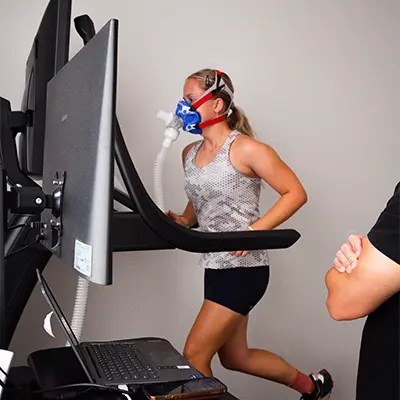
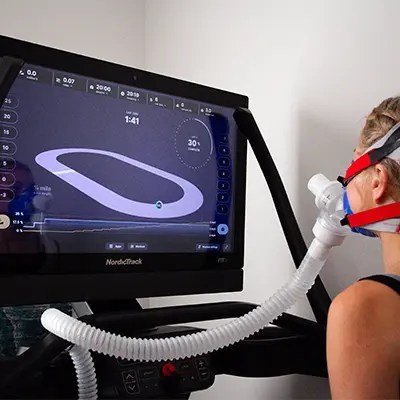
For endurance athletes, another invaluable tool is VO₂ max testing. This assessment measures how efficiently your body uses oxygen during exercise and helps identify personalized training zones, allowing athletes to train at the right intensity rather than relying on generic formulas. Instead of wondering whether today’s run should be harder or easier, we know. That insight makes every workout more focused and productive.
Blood Testing: Understanding What We Can’t See
Sometimes performance issues have nothing to do with motivation. Nutrient deficiencies, inflammation, hormonal imbalances, or inadequate recovery can quietly limit performance long before symptoms become obvious.
Comprehensive laboratory testing allows us to identify those hidden obstacles and make informed adjustments before they become bigger problems.
Recovery Is Part of the Measurement
One of the biggest misconceptions in fitness is believing improvement happens during training. Training creates the stimulus. Recovery creates the adaptation.
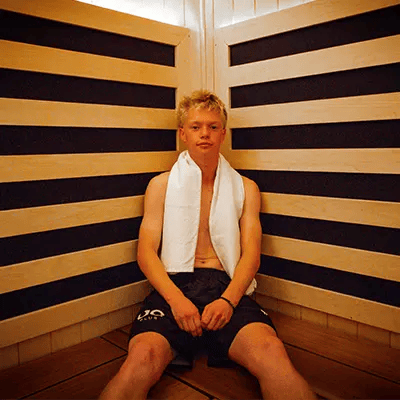
Athletes can recover more effectively and continue progressing safely through various recovery strategies and options within the WOW Clinic including:
- Infrared & Dry Sauna
- Cold Plunge
- IV Therapy
- Hyperbaric Oxygen Therapy
Measure Your Effort and Trust the Process
As I’ve shared, Effort is one of the core principles of Adventure Your Potential, but another is just as important: Patience.
Many people abandon their goals because they don’t see immediate results. They expect dramatic changes in days or weeks, and when progress slows or doesn’t show up as quickly as they’d hoped, they become discouraged and quit. In my experience as a coach, a lack of patience is one of the greatest goal killers.
That’s why measuring your progress is so important. Objective measurements aren’t there to judge your success; they’re there to guide it. They tell us whether our training, nutrition, and recovery are producing the desired results. If they are, we stay the course. If they aren’t, we make thoughtful adjustments. We don’t panic, and we don’t give up.
Real progress rarely happens on a straight path. There will be plateaus, setbacks, and seasons when improvement seems almost invisible. That doesn’t mean you’re failing. It means you’re in the process. The key is to remain patient, trust the data, and continue moving forward. Success is measured by your willingness to consistently evaluate your progress, make necessary adjustments, and keep showing up with purpose.
Measure. Adjust. Stay patient. Repeat.
When you combine focused effort with unwavering patience, success stops being something you hope for and becomes something you build, one intentional step at a time. And that process is what unlocks your true potential.
Success isn’t measured by a single workout or the number on the scale, but by consistently tracking progress, making informed adjustments, and staying patient. That’s why I’ve partnered with Dr. Ben Fogg and the team at Wasatch Optimal Wellness (WOW) Clinic in Heber City, combining advanced performance testing with personalized coaching to eliminate guesswork and help clients train smarter, recover better, and achieve lasting results.
Whether your goal is better health, weight loss, building strength, or preparing for your next athletic challenge, every successful journey begins with a baseline. If you’re ready to stop guessing and start measuring your success, I’d love to help you unlock your potential with a training plan built specifically for you.
Your potential is greater than you think. Let’s measure it, develop it, and discover what’s possible…together.

