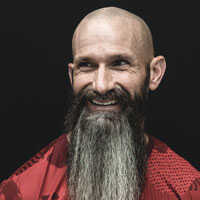
As the winter snows settle across Heber Valley and our days turn crisp, shorter, and more introspective, it’s the perfect season to reflect on the deeper connections between physical training and our mental and emotional health. Over the past two+ years writing for Heber Valley Life Magazine, you’ve heard me talk about trail running, ultra events, fitness, personal training, and the grit it takes to push limits. But this season I want to go one level deeper: how the discipline required to train your body, in fact, becomes a training ground for your mind and emotions.
As a professional endurance athlete (ultra runner), a coach, and an elite personal trainer based here in the valley, I’ve seen it in my own life and in the lives of my clients: when we consistently train our physical bodies, something shifts in how we handle stress, setbacks, emotions, and life’s inevitable challenges. I live by four core attributes that I believe anchor this whole process: attitude, consistency, effort, and patience. In this article, I’ll share how each of these plays out not just in physical training, but in mental and emotional resilience.
Attitude: The Starting Point
Physical training begins long before you lace up the shoes or strap on the watch. It begins with belief: belief you can set a goal, belief you can chase it, belief you’re worthy of the process. I encourage my clients to adopt a positive and proactive attitude. This isn’t naïve optimism, it’s realistic confidence. In ultra running, there are long hours, dark moments, hills you didn’t expect, and weather you didn’t anticipate. The same is true in life: emotional storms, work stress, family demands, and mental fatigue. A positive attitude doesn’t mean ignoring reality; it means believing you can engage with reality, you can train through it, and you can adapt.
When you train your body with the mindset: “I may be tired, but I can move. I may feel doubt, but I can step forward.” You build neurological and emotional patterns of resilience. You’re not just building muscles and cardiovascular fitness; you’re building confidence in yourself and in your capacity to handle more. That translates to mental and emotional health: you start believing that you can handle not just the training session, but life’s difficult bouts.
Consistency: The Power of Routine
“Consistency is king,” I say this to every athlete I coach and every client I train. Why? Because our bodies—and our minds—evolve toward their primary environment. If you show up day after day, week after week, the body adapts. It becomes stronger, more efficient, more resilient. But, and this is key, so does your mind. You are telling your brain, your nervous system: this is what we do. We move. We recover. We prepare. We adapt.

From an emotional health standpoint, consistency gives structure and predictability in a world of change. It gives your mental state a foundation: “I show up.” When emotions run high, when stress mounts, when life throws something unexpected—that consistent routine becomes an anchor. In my own ultra running career, the days of consistency are the ones where, mentally, I felt the strongest. When I skipped too many sessions or was erratic, the mind started to roam: doubt, worry, fear. However, the body still craved structure, and the mind craved that same pattern.
Effort: Turning Consistency into Growth
Consistency is the baseline—but effort is the catalyst. If you merely show up but do nothing, you may preserve fitness, you may maintain the status quo, but you won’t transform. In the world of endurance athletics, as in life, you must push beyond your comfort zone. You must structure training to challenge your current strengths. You must invite discomfort so adaptation can occur.
In doing so, you build not only physical strength, but emotional and mental grit. You learn to lean into discomfort. You learn to trust your process. You encounter adversity in training: flat runs, long climbs, fatigue, injury risk, and you learn that your mind and emotions don’t have to collapse. You show up, you steer your body, you move forward. That carries into daily life: you’ll face setbacks, stressors, long work days, and family strains. If your training has already primed you to tolerate fatigue, to embrace effort, to lean when it gets tough—you are more emotionally stable, more mentally prepared, more grounded.
Patience: The Often‐Overlooked Attribute
Here’s where many people stall—not for lack of desire, not for lack of show up, but for impatience. In our instant everything world, we want fast results. We want the body change, the mental calm, the emotional resilience—yesterday. But training, physical, mental, and emotional, is a long game. And patience is the linchpin.
As a coach, I often say, “Patience is the asset; impatience is the liability.” Because when you get impatient, you cut corners, skip parts of the process, overdo, under recover, compare yourself unfairly, and abandon training. Physically, you may wreck yourself or burn out. Mentally and emotionally, you may spiral into feelings of frustration, guilt, shame, and comparison. Meanwhile, the consistent effort you had built begins to erode. The emotional benefits you might have harvested begin to fade.
A Call to ACTION
If you’re reading this, I invite you to see your physical training not just as body work but as mind and emotional work. You don’t have to be an ultra‐runner or an elite athlete to benefit. It might be three consistent workouts a week, it might be strength work plus trail time, or it might simply be moving outside despite the cold. What matters is attitude, consistency, effort, and patience.
If you find your mind racing, emotions tangled, stress mounting—try shifting the lens: what if the fastest route through this emotional terrain is physical motion? What if your bike ride, your run, your snow shoe walk is a training session for your emotional resilience? It is. Because when you train your body, your brain, your nervous system, and your emotional self, everything works together and moves along. You build strength for life, not just for sport.
This winter, let the valley’s white stillness be your invitation—not just to train your legs, but to train your mind and heart. Let your physical routine become your emotional anchor. Build your strength—not just in the muscles you can see, but in the quiet confidence, the mental clarity, and the emotional steadiness that comes from commitment.
Here’s to the process. Here’s to the journey. Here’s to training body, mind, and heart together. And if you want the help of a professional fitness trainer and coach, don’t hesitate to reach out for help. I would be honored to support you through the process of reaching your life’s fitness goals.