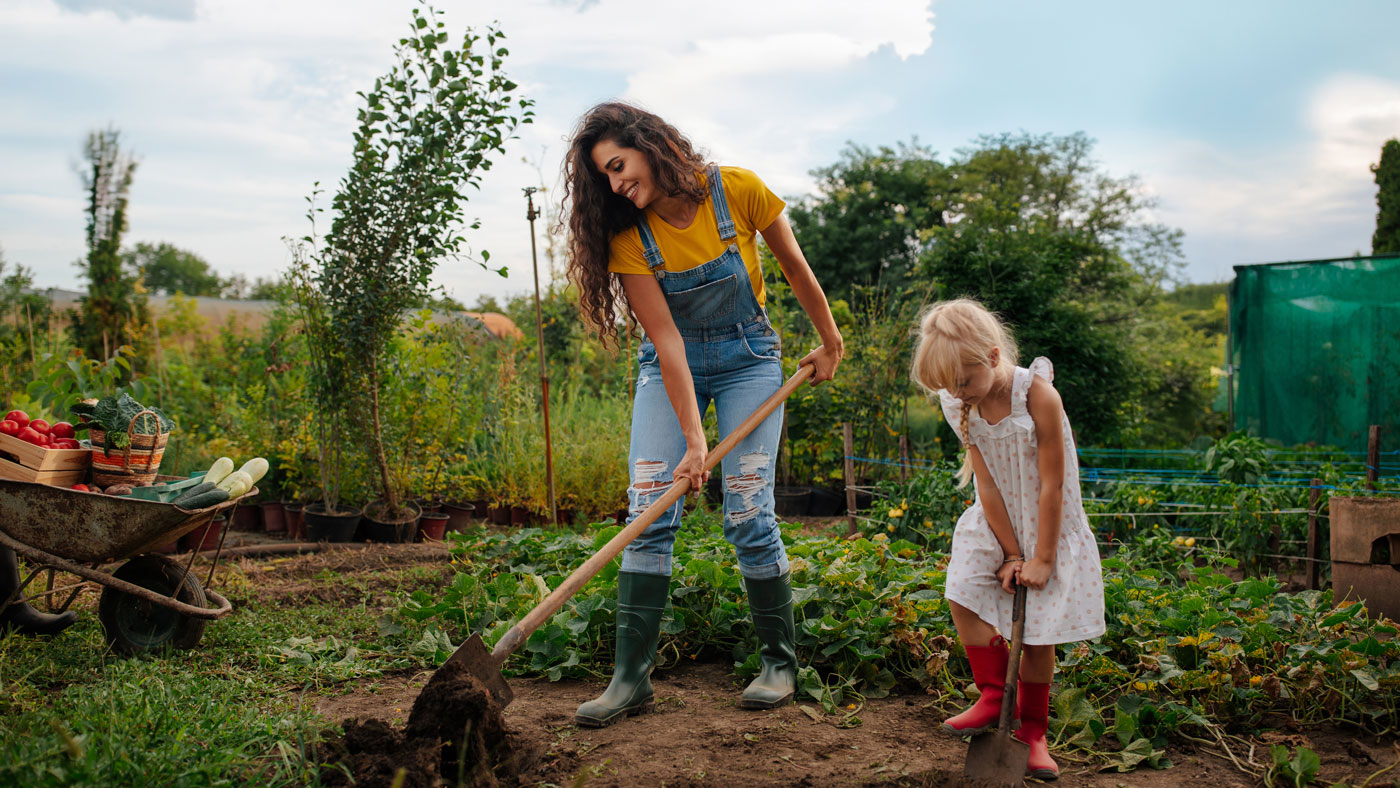
Spring in Heber Valley arrives in a rush of green. Daffodils and tulips pop up like cheerful exclamation points, warming our hearts right along with the sun. It’s the season that makes you want to get your hands dirty—in the very best way.
Here’s a fun gardening secret: flowers and vegetables love growing together. Interplanting blooms with edibles boosts beauty and pollination. So why not tuck a few pots onto your patio or add a couple of raised beds to your yard? Even with a busy life, starting—or expanding—a garden is absolutely possible. Yes, really.
Growing food at home—whether in the ground or in raised beds—builds more than nutrition. It builds confidence. And it doesn’t have to be complicated or labor-intensive. With a few simple adjustments, you can create a wildly beautiful, productive garden in a single season, growing a surprising amount of food in a relatively small space.
The real secret to a thriving, organic garden is soil nutrition. Rich compost makes all the difference. Making your own compost is easy, inexpensive, and often better than anything you can buy—without the risk of burning crops, which can happen with chemical fertilizers.


One of the best soil boosters? Well-rotted manure. Horse and cattle owners often have years-old piles they’re happy to share, while chicken and goat owners clean pens regularly and usually give away their nutrient-rich manure. Gently rake or lightly shovel it into the top few inches of soil. For an added boost, you can spray or sprinkle organic amendments like seaweed extract or earthworm castings.
A light dusting of Epsom salts and sulfur pellets can also help. These inexpensive additions gently lower soil pH, making minerals more available to plants and encouraging stronger growth and better fruit production.
Compost ingredients are everywhere. Dried or green plants, grass clippings, fallen leaves, pine needles—even weeds—are packed with essential nutrients. Old hay and straw make excellent mulch, especially when layered 12 to 18 inches deep to suppress weeds. Worried about seeds hiding in straw? Just pile it up and water it first—any sprouts will die before the straw ever reaches your garden.
Sawdust or shredded wood chips encourage beneficial fungi and bacteria that help deliver more nutrients and water to your plants—sometimes up to seven times more. You can plant right into two or three inches of mulch by scattering seeds in wide rows or creating close rows with a hoe and lightly covering them with soil.
Wide rows—anywhere from one to four feet across—are ideal. Space plants so they touch at maturity, which helps retain soil moisture and keeps roots happy. Plants with moist roots thrive, and underground networks of beneficial fungi even help them share resources with one another.
You can mix compost ingredients all at once or layer them in place—the earthworms will happily do the rest. Over time, that thick mulch settles down to about four to six inches. As plants grow, keep topping it off with fresh mulch: lawn clippings, pine needles from a neighbor’s tree, or sawdust from a woodshop. With healthy mulch, watering just once a week is often enough to keep plants green, flowering, and thriving.
This year, my husband and I are transforming a garden area east of our high-tunnel greenhouse near the creek. With a small pavilion and lawn, it’s a perfect spot to blend beauty and productivity. Protected from the harsh afternoon sun, it’s ideal for pollinators, too. We’ve planted a generous three-foot-wide row of black-eyed Susans and wildflowers to draw bees right into the greenhouse.
Where we once grew greens and herbs on landscape fabric, we’re now planting potatoes, onions, carrots, and beets. Between wide rows, we’ll tuck in chives, leeks, and bush beans to support soil health and add nitrogen. Across the creek, where orchard grass has stubbornly held on for decades, we’ll reclaim the space with landscape fabric, compost, and towering sunflowers—followed by corn and black oil sunflowers—to create a stunning, productive wall.
Along the stream, wildflowers and herbs will thrive in the cool, moist air. Lemon balm, spearmint, peppermint, and kitchen staples like basil, rosemary, and oregano will fill the space with color and fragrance. We also love scattering seed mixes under fruit trees—adding charm while improving tree health with nitrogen-fixing greens and groundcover.
Near the fences, tall herbs like borage mingle with easy-to-harvest edibles such as red amaranth, chia, and flax. Vertical arches made from cattle panels support pole beans and winter squash, while cucumbers and tomatoes climb fences. Large squash happily wander beneath fruit trees, right where they belong.
A garden like this feeds more than your table. It nourishes body and soul, brings joy to family life, and offers the quiet comfort of knowing you can grow your own delicious, highly nutritious food. Spring is calling—and it’s a beautiful time to answer.
Heber Valley Self-Reliance Group
hebervalleyready.org
Wasatch Fire District
251 E 1200 S – Heber City
ALL COMMUNITY CLASSES ARE FREE
MARCH 2026
Steady Minds in Crisis
Psychological Approach to First Aid
Don’t Go Hungry
Planning for Food Security
Everyday Emergencies
First Aid for People & Pets
Your Bags are Packed
From Getting Home to Never Going Back
APRIL 2026
Liquid LIFELINE
Water Security in a Crisis
Nourishment & Morale
Food Storage & Off-Grid Cooking
Neurological Emergencies
Seizures, Strokes, & Sudden Neurological Events
May 2026
PANDEMICS
Preparedness & Shelter in Place
WHEN BABIES CAN’T WAIT
Emergency Childbirth
POWER & LIGHT IN EMERGENCIES
Light Sources When the Grid is Down